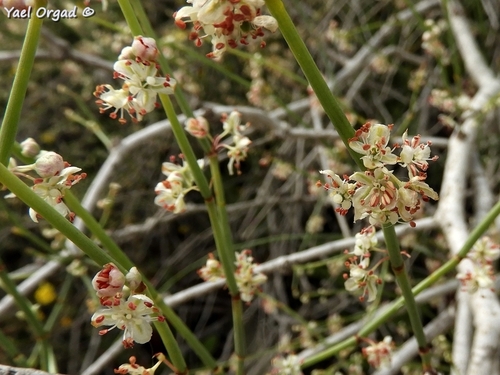
Rumex aquaticus
L.
Red dock, Tu ta huang, Parelle

(c) Kari Pihlaviita, some rights reserved (CC BY-NC)
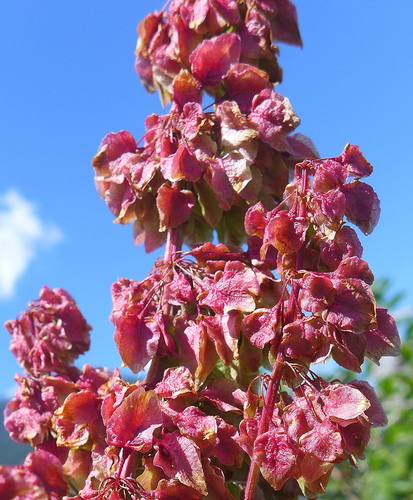
(c) judith holm, some rights reserved (CC BY-NC-ND), uploaded by judith holm
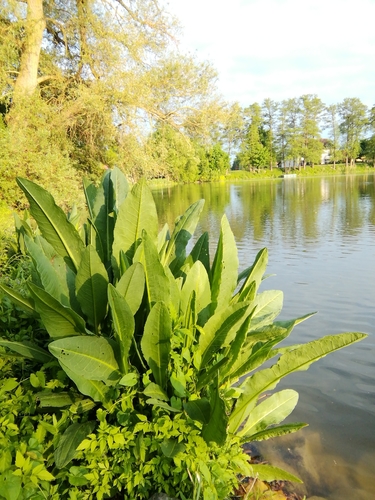
(c) Jakob Fahr, some rights reserved (CC BY-NC), uploaded by Jakob Fahr
What to Eat
Edible parts: Leaves
The leaves are edible cooked.
Known Hazards
Where to Find It
It is a temperate plant. It grows in damp or wet places. It often grows near the water's edge. In central China it grows between 200-3,600 m above sea level.
Asia, Central Asia, China, Czech Republic, Europe, Japan, Kazakhstan, Korea, Kyrgyzstan, Mongolia, North America, Russia,
How to Identify
A tall perennial dock reaching 1.8 m (6 ft), with hermaphroditic flowers appearing July to August. Wind-pollinated and adapted to light sandy, medium loamy, and heavy clay soils across a range of pH levels from mildly acidic to mildly alkaline. Tolerates semi-shade conditions and thrives in wet soil or shallow water environments.
How to Grow
A plant of shallow water.
Propagation: Sow seed in spring or autumn directly in situ. Can also be propagated by division in spring.
Medicinal Uses
The root is alterative, astringent, cholagogue, deobstruent, depurative, detergent, laxative, and mildly tonic. Depending on the dose, harvest time, and the relative concentrations of tannins and anthraquinones present, it can either cause or relieve diarrhoea. It is used internally for piles, bleeding of the lungs, various blood complaints, and chronic skin diseases. Externally, it is applied to skin diseases, ulcers, and similar complaints. The root has also been used with positive effect to slow the progression of cancer, employed as an alterative and tonic. The root is harvested in early spring and dried for later use. Excess doses can cause gastric disturbance, nausea, and dermatitis, so some caution is advised.
Other Uses
Dark green to brown and dark grey dyes can be obtained from the roots of many species in this genus without the need for a mordant. The dried and powdered root has a cleansing and detergent effect on the teeth.
Wikipedia
Source ↗Rumex aquaticus is a flowering plant in the knotweed family, Polygonaceae. It is native to temperate Eurasia. It is commonly known as the western dock found in aquatic environments.
References (4)
- Flora of China @ efloras.org Volume 5
- Romanowski, N., 2007, Edible Water Gardens. Hyland House. p 113
- Simkova, K. et al, 2014, Ethnobotanical review of wild edible plants used in the Czech Republic. Journal of Applied Botany and Food Quality 88, 49-67
- Sp. pl. 1:336. 1753