Brachychiton viscidulus
(W. Fitzg.) Guymer
Sticky kurrajong

(c) Loxley Fedec, some rights reserved (CC BY-NC), uploaded by Loxley Fedec
(c) geoffbyrne, some rights reserved (CC BY-NC)
(c) geoffbyrne, some rights reserved (CC BY-NC)
What to Eat
Edible parts: Seeds
The seeds are edible.
Where to Find It
A tropical plant. It grows in northern Western Australia in the Kimberleys. It grows on poor soils over sandstone or limestone.
Australia*,
How to Identify
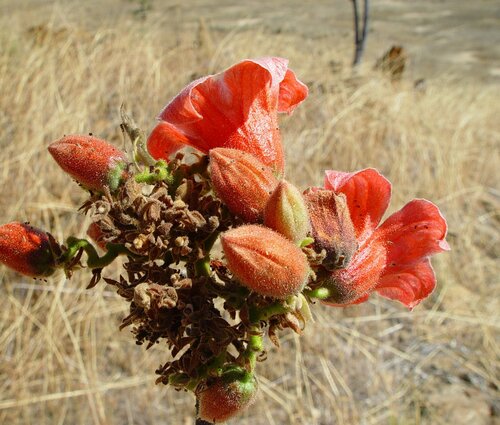
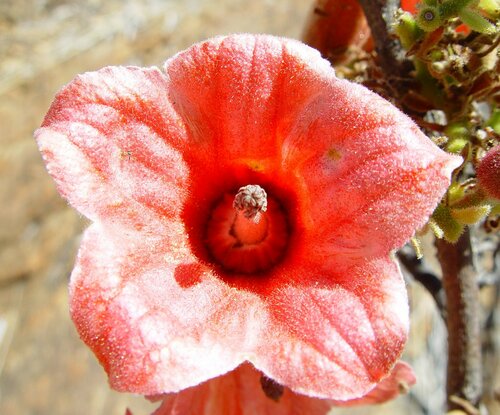
A shrub or small tree. It grows 2-8 m tall. The flowers are pink to red or orange.
Wikipedia
Source ↗Brachychiton viscidulus is a plant in the Malvaceae family, native to Western Australia. It was first described by William Vincent Fitzgerald in 1906 as Sterculia viscidula, but was transferred to the Brachychiton genus in 1989 by Gordon P. Guymer to become Brachychiton viscidulus. B. viscidulus is a tree with pink-red to orange flowers which grows to heights of 2m to 8m, which flowers from April to January. It grows on clays, on skeletal soils over many different types of rocks, and is found on rocky slopes, gorges scarps.
Production
Plants flower April to December.
Notes
Also put in the family Sterculiaceae.
Names & Synonyms
References (3)
- Paczkowska G. & Chapman, A. R., 2000, The Western Australian Flora. West Australian herbarium. p 540
- Smith, Nicholas et al. 1993, Ngarinyman Ethnobotany: Aboriginal Plant Use from the Victoria River Area Northern Australia. Northern Territory Botanical Bulletin No 16. Parks and Wildlife Commission of the Northern Territory. p 12.
- Vigilante, T., et al, 2013, Island country: Aboriginal connections, values and knowledge of the Western Kimberley islands in the context of an island biological survey. Records of the Western Australian Museum Supplement 81: 145-182