Brachychiton megaphyllus
Guymer
Red flowered kurrajong
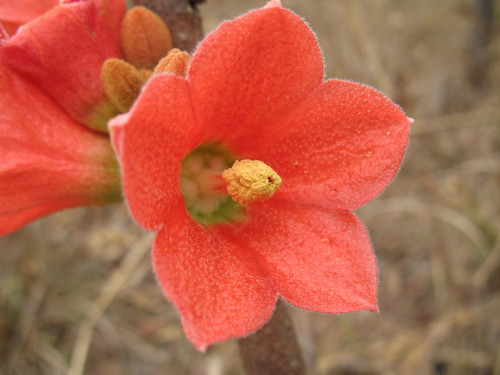
(c) Anneke Jonker, some rights reserved (CC BY-NC), uploaded by Anneke Jonker
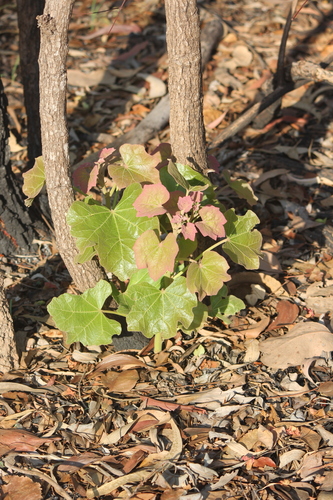
(c) Stephen Fricker, some rights reserved (CC BY-NC), uploaded by Stephen Fricker
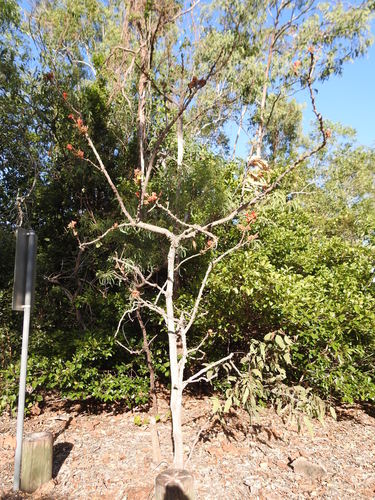
(c) Anthony Kurek EntSocVic, some rights reserved (CC BY-NC), uploaded by Anthony Kurek EntSocVic
What to Eat
Edible parts: Seeds, Tap root
The seeds are traditionally roasted and eaten. The taproot is also edible.
Where to Find It
A tropical plant. It grows in savannah and open forests in the Northern Territory, Australia. It is best in full sun.
Australia*,
How to Identify
A shrub or small tree. It grows 2-6 m tall. The leaves are large and simple. They are 11-30 cm long by 14-25 cm wide. The leaves are round and hairy. They are arranged alternately. It loses its leaves during the dry season. It develops flowers are fruit while it is leafless. It has a carrot shaped taproot. The flowers are red and have 5 or 6 petal like segments. They are 3-4 cm long. The fruit are 8-12 cm long by 3-4 cm wide. They are oblong and have dense brown hairs. The fruit split open. There are many hairy yellow seeds.
How to Grow
Plants can be grown from seeds. Plants can re-grow after fire.
Wikipedia
Source ↗Brachychiton megaphyllus, commonly known as the red-flowering kurrajong, is a tree of the genus Brachychiton found in northern Australia. It was described in 1988 by Gordon Guymer in his revision of the genus, previously having been considered a variant of Brachychiton paradoxus. Hybrids with Brachychiton multicaulis have been reported.
Production
It produces seeds after about 11 years. Trees live for about 20 years.
Notes
There are about 30 Brachychiton species. Most are in Australia. Also put in the family Sterculiaceae.
Names & Synonyms
Giant-leaved kurrajong, Nganwarra, Ngurniyani
References (8)
- Lazarides, M. & Hince, B., 1993, Handbook of Economic Plants of Australia, CSIRO. p 37
- Smith, N and Wightman, G.M., 1990, Ethnobotanical Notes from Belyuen Northern Territory Australia. Northern Territory Botanical Bulletin No 10. Parks and Wildlife Commission of the Northern Territory. p 5, 8.
- Smith, N. M., 1991, Ethnobotanical Field Notes from the Northern Territory, Australia, J. Adelaide Bot. Gard. 14(1): 1-65
- Tiwi Plants and Animals. 2001, Aboriginal flora and fauna knowledge from Bathurst and Melville Islands, northern Australia. Northern Territory Botanical Bulletin; No. 24 p 30
- Wightman, Glenn et al. 1991.Alawa Ethnobotany: Aboriginal Plant Use from Minyerri, Northern Australia. Northern Territory Botanical Bulletin No 11. Parks and Wildlife Commission of the Northern Territory. p 6, 7.
- Wightman, G. & Andrews, M., 1991, Bush Tucker Identikit. Common Native Food Plants of Australia’s top end. Conservation Commission Northern Territory. p 4
- Wightman, Glenn et al. 1992, Mangarrayi Ethnobotany: Aboriginal Plant Use from the Elsey Area Northern Australia. Northern Territory Botanical Bulletin No 15. Parks and Wildlife Commission of the Northern Territory. p 10, 11.
- Wightman, G. & Brown, J., 1994, Jawoyn Plant Identikit, Common Useful Plants in the Katherine Area of Northern Australia. Conservation Commission Northern Territory. p 38