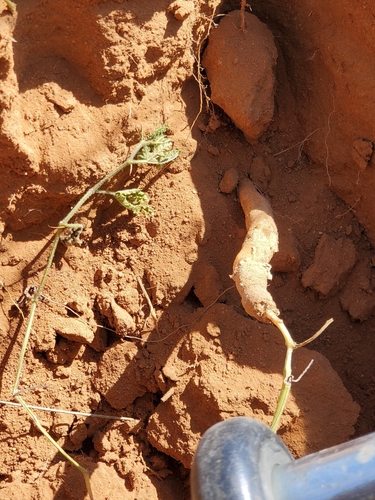
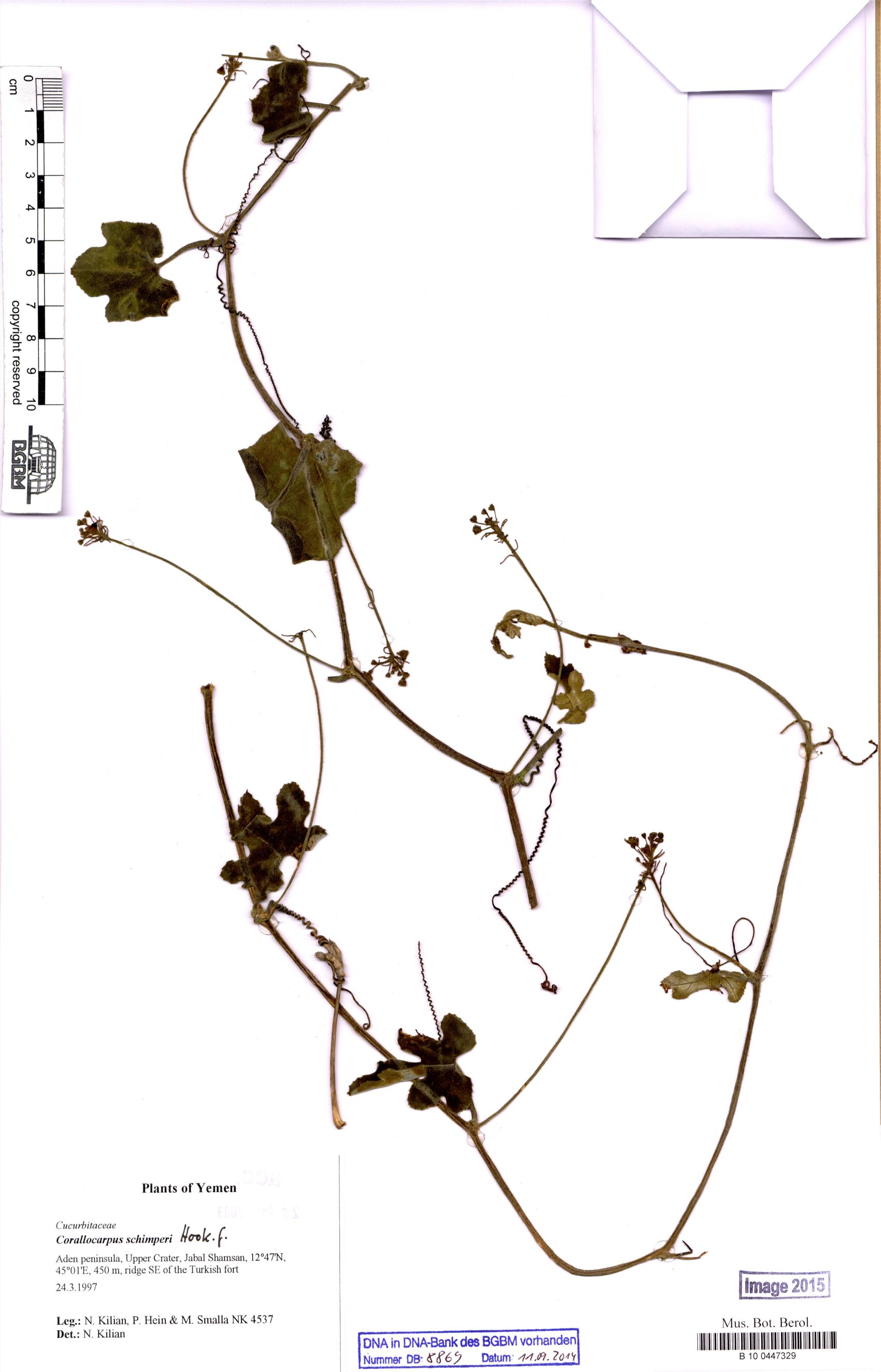
Corallocarpus schimperi
(Naud.) Hook. f.
CucurbitaceaeLeaves
gbif · cc-by-sa
GBIF
GBIF
What to Eat
Edible parts: Leaves
The leaves are eaten as a vegetable.
Where to Find It
It is a tropical plant.
Africa, Arabia, Asia, East Africa, Ethiopia, India, Iran, Middle East, Pakistan,
Countries: United Arab Emirates, Afghanistan, Armenia, Angola, Azerbaijan, Bangladesh, Burkina Faso, Bahrain, Burundi, Benin, Brunei, Bhutan, Botswana, Congo (DRC), Central African Republic, Congo (Republic), Cote d'Ivoire, Cameroon, China, Cape Verde, Djibouti, Algeria, Egypt, Eritrea, Ethiopia, Gabon, Georgia, Ghana, Gambia, Guinea, Equatorial Guinea, Guinea-Bissau, Indonesia, Israel, India, Iraq, Iran, Jordan, Japan, Kenya, Kyrgyzstan, Cambodia, Comoros, North Korea, South Korea, Kuwait, Kazakhstan, Laos, Lebanon, Sri Lanka, Liberia, Lesotho, Libya, Morocco, Madagascar, Mali, Myanmar, Mongolia, Mauritania, Mauritius, Maldives, Malawi, Malaysia, Mozambique, Namibia, Niger, Nigeria, Nepal, Oman, Philippines, Pakistan, Qatar, Rwanda, Saudi Arabia, Seychelles, Sudan, Singapore, Sierra Leone, Senegal, Somalia, South Sudan, Sao Tome & Principe, Syria, Eswatini, Chad, Togo, Thailand, Tajikistan, Timor-Leste, Turkmenistan, Tunisia, Turkey, Taiwan, Tanzania, Uganda, Uzbekistan, Vietnam, Yemen, South Africa, Zambia, Zimbabwe
How to Identify
A climber. The roots are fibrous. It has long tendrils coiled like a spring. The leaves are broadly oval or heart shaped and 3-6 cm long by 4-9 cm wide. There are teeth along the edge and fine hairs on the leaf. Male flowers are near the ends and female flowers do not have stalks. They are in clusters. The fruit are oval and cone shaped and red. They are 1-1.5 cm long. The seeds are about 3 mm long. Plants vary a lot.
Names & Synonyms
Danqesha
Corallocarpus courbonii (Naud.) Cogn.Corallocarpus velutinus (Dalz. & Gibs.) Hook. f. ex C. B. Cl.Rhynchocarpa courbonii Naud.Rhynchocarpa pedunculosa Naud.Rhynchocarpa schimperi Naud.
References (4)
- Addis, G., et al, 2013, The Role of Wild and Semi-wild Edible Plants in Household Food Sovereignty in Hamer and Konso Communities, South Ethiopia. Ethnobotany Research & Applications. 11:251-271
- East African Herbarium records, 1981,
- Lulekal, E., et al, 2011, Wild edible plants in Ethiopia: a review on their potential to combat food insecurity. Afrika Focus - Vol. 24, No 2. pp 71-121
- Peters, C. R., O'Brien, E. M., and Drummond, R.B., 1992, Edible Wild plants of Sub-saharan Africa. Kew. p 100