Sida ovata
Forssk.

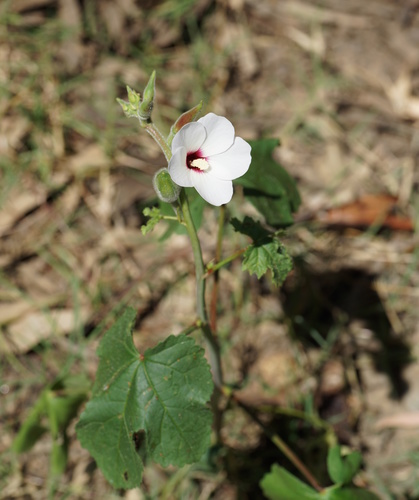
(c) Bart Wursten, some rights reserved (CC BY-NC)
no rights reserved
no rights reserved
What to Eat
Edible parts: Leaves
The leaves are eaten as a food.
Where to Find It
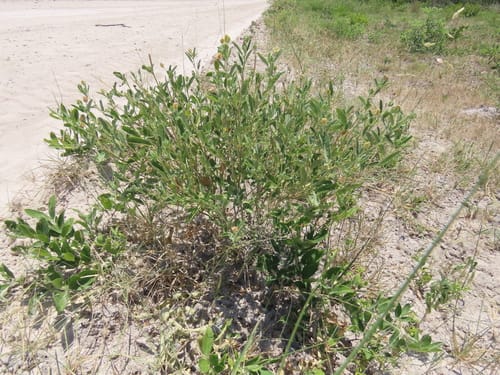
It is a tropical plant. It grows in well drained soil and can be in rocky and sandy soils. It grows between 800-1,200 m above sea level. It is rare in Swaziland. It can grow in arid places.
Africa, Arabia, Asia, Botswana, Burkina Faso, Cameroon, Central Africa, Central African Republic, CAR, Chad, Congo, East Africa, Egypt, Eswatini, Ethiopia, Kenya, India, Iran, Malawi, Mali, Mauritania, Middle East, Mozambique, Namibia, Niger, Nigeria, North Africa, Oman, Pakistan, Rwanda, Saudi Arabia, Senegal, Socotra, Somalia, South Africa, Southern Africa, Sudan, Swaziland, Tanzania, Uganda, West Africa, Yemen, Zambia, Zimbabwe,
How to Identify
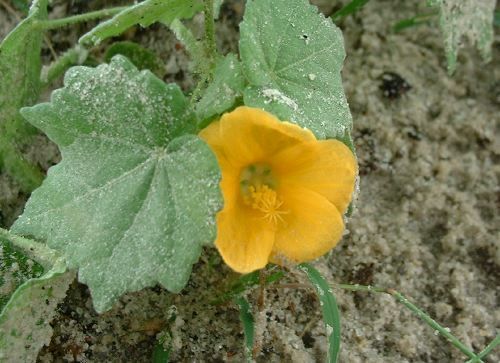
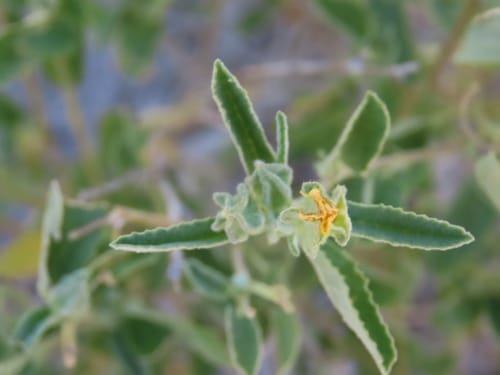
A herb or shrub. It is erect and keeps growing from year to year. It grows 90 cm high. It is hairy. The leaves are 2-5 cm long and 1-4 cm wide. They are oval and have coarse teeth. They are dark green above and ash grey underneath. The flowers are white and in the axils of leaves. They occur singly or in pairs.
Names & Synonyms
Bal, Dhabi, Egweret, Okahamupunda, Qirqixxe
References (9)
- East African Herbarium records, 1981,
- Flora of Pakistan. www.eFloras.org
- Fowler, D. G., 2007, Zambian Plants: Their Vernacular Names and Uses. Kew. p 82
- Goode, P., 1989, Edible Plants of Uganda. FAO p 36
- Peters, C. R., O'Brien, E. M., and Drummond, R.B., 1992, Edible Wild plants of Sub-saharan Africa. Kew. p 146
- Royal Botanic Gardens, Kew (1999). Survey of Economic Plants for Arid and Semi-Arid Lands (SEPASAL) database. Published on the Internet; http://www.rbgkew.org.uk/ceb/sepasal/internet [Accessed 3rd May 2011]
- Sina, B. & Degu, H. D., 2015, Knowledge and use of Wild Edible Plants in the Hula District of the Sidama Zone. International Journal of Bio-resource and Stress Management 6(3):352-365
- Swaziland's Flora Database http://www.sntc.org.sz/flora
- World Checklist of Useful Plant Species 2020. Royal Botanic Gardens, Kew