Grewia erythraea
Schweinf.
MalvaceaeFruit
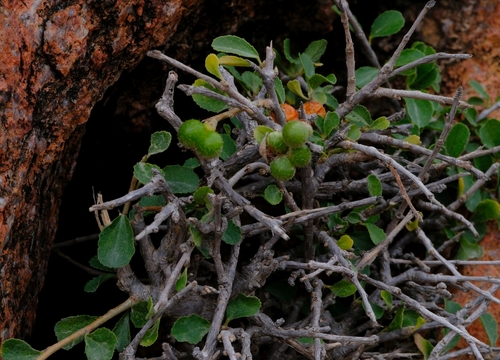
iNaturalist · cc-by-nc
(c) Nick Helme, some rights reserved (CC BY-NC), uploaded by Nick Helme
(c) Nick Helme, some rights reserved (CC BY-NC), uploaded by Nick Helme
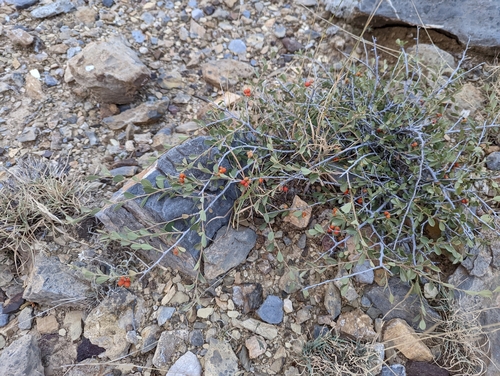
iNaturalist · cc-by-nc
(c) Jamila J Hakam, some rights reserved (CC BY-NC), uploaded by Jamila J Hakam
(c) Jamila J Hakam, some rights reserved (CC BY-NC), uploaded by Jamila J Hakam
What to Eat
Edible parts: Fruit
The ripe fruit are eaten fresh and are sweet.
Where to Find It
It is a tropical plant. In Somalia it occurs between 50-1,500 m above sea level.
Afghanistan, Africa, Angola, East Africa, Egypt, Eritrea, Ethiopia, Kenya, Middle East, North Africa, Oman, Socotra, Somalia, Sudan, Yemen,
Countries: United Arab Emirates, Afghanistan, Angola, Burkina Faso, Bahrain, Burundi, Benin, Botswana, Congo (DRC), Central African Republic, Congo (Republic), Cote d'Ivoire, Cameroon, Cape Verde, Djibouti, Algeria, Egypt, Eritrea, Ethiopia, Gabon, Ghana, Gambia, Guinea, Equatorial Guinea, Guinea-Bissau, Israel, Iraq, Iran, Jordan, Kenya, Comoros, Kuwait, Lebanon, Liberia, Lesotho, Libya, Morocco, Madagascar, Mali, Mauritania, Mauritius, Malawi, Mozambique, Namibia, Niger, Nigeria, Oman, Qatar, Rwanda, Saudi Arabia, Seychelles, Sudan, Sierra Leone, Senegal, Somalia, South Sudan, Sao Tome & Principe, Syria, Eswatini, Chad, Togo, Tunisia, Tanzania, Uganda, Yemen, South Africa, Zambia, Zimbabwe
How to Identify
A shrub. It grows 3 m tall. The bark is smooth and grey. The leaves are rounded and 1.5 cm long. The flowers are white. They occur singly in the axils of leaves. The fruit have 2-4 loves and each lobe is 4-5 mm across.
Other Information
It is a famine food.
Notes
These were in the Sparrmanniaceae and the Tiliaceae.
Names & Synonyms
Chaqlessa, Dumeg, Hidayto, Hunqass, Midho-cas, Schohudt, Tukalalmis
Grewia tenax var. erythraea (Schweinf.) Chiov.
References (12)
- Addis, G., Asfaw, Z & Woldu, Z., 2013, Ethnobotany of Wild and Semi-wild Edible Plants of Konso Ethnic Community, South Ethiopia. Ethnobotany Research and Applications. 11:121-141
- Addis, G., et al, 2013, The Role of Wild and Semi-wild Edible Plants in Household Food Sovereignty in Hamer and Konso Communities, South Ethiopia. Ethnobotany Research & Applications. 11:251-271
- Al-Fatimi, M. A., Wild Edible Plants Traditionally Collected and Used in Southern Yemen. Research Square. University of Aden. p 19
- Dale, I. R. and Greenway, P. J., 1961, Kenya Trees and Shrubs. Nairobi. p 564
- East African Hebarium records, 1981,
- Edwards. S., et al, (Eds), 1995, Flora of Ethiopia and Eritrea. Vol.2, Part 2 Canellaceae to Euphorbiaceae. Uppsala, Sweden. p 162
- Flora Somalia Vol. 1, 1993, http://plants.jstor.org
- Lulekal, E., et al, 2011, Wild edible plants in Ethiopia: a review on their potential to combat food insecurity. Afrika Focus - Vol. 24, No 2. pp 71-121
- Ocho, D. L., et al, 2012, Assessing the levels of food shortage using the traffic light metaphor by analyzing the gathering and consumption of wild food plants, crop parts and crop residues in Konso, Ethiopia. Journal of Ethnobiology and Ethnomedicine 8:30
- Peters, C. R., O'Brien, E. M., and Drummond, R.B., 1992, Edible Wild plants of Sub-saharan Africa. Kew. p 191
- Teklehaymanot, T., 2017, An ethnobotanical survey of medicinal and edible plants of Yalo Woreda in Afar regional state, Ethiopia. Journal of Ethnobiology and Ethnomedicine 13:40
- World Checklist of Useful Plant Species 2020. Royal Botanic Gardens, Kew