Licania belloi
Prance
Sabo
ChrysobalanaceaeFruit
iNaturalist · cc-by-nc
(c) Leonardo Álvarez-Alcázar, some rights reserved (CC BY-NC), uploaded by Leonardo Álvarez-Alcázar
(c) Leonardo Álvarez-Alcázar, some rights reserved (CC BY-NC), uploaded by Leonardo Álvarez-Alcázar

gbif · cc-by-nc
Field Museum of Natural History - Botany Department | NSF/Mellon - GPI
Field Museum of Natural History - Botany Department | NSF/Mellon - GPI

gbif · cc-by-nc
Field Museum of Natural History - Botany Department | NSF/Mellon - GPI
Field Museum of Natural History - Botany Department | NSF/Mellon - GPI
What to Eat
Edible parts: Fruit
The fruit is eaten.
Where to Find It
It is a tropical plant.
Central America, Costa Rica, Nicaragua,
Countries: Belize, Costa Rica, Guatemala, Honduras, Nicaragua, Panama, El Salvador
How to Identify
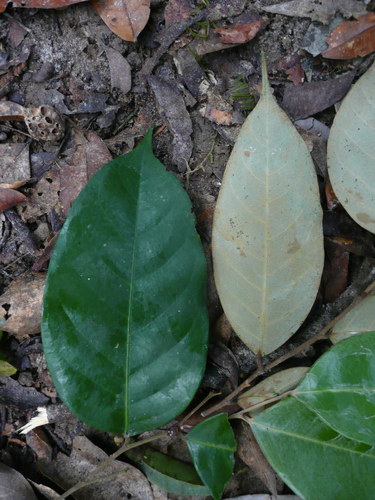
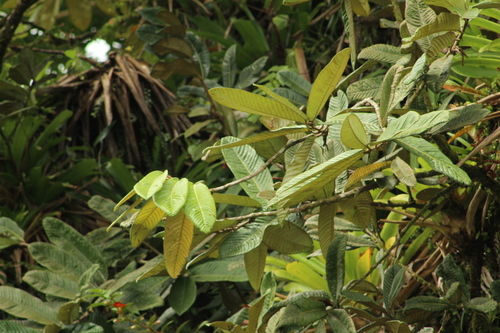
A tree. It grows 8-30 m tall. The trunk is cylinder shaped. The leaves are simple and alternate. They are 24-40 cm long by 6-12 cm wide. They are oblong to sword shaped and taper to the tip. There are many secondary veins and the edges are entire. The flowers are in panicles 25 cm long. The flowers are white and 5 mm across. The fruit is fleshy and 8-10 cm across.
Names & Synonyms
Sonsapote
References (2)
- Castaneda, H., & Stepp, J. R., 2007, Ecosystems as Sources of Useful Plants for the Guaymi People of Costa Rica. Ethnobotany Journal. 5:249-257
- Langlois, H. C., 2004, Ethnobotanical analysis of different successional stages as sources of wild edible plants for the Guaymi people in Costa Rica. M. Sc. thesis University of Florida.