Sabal yapa
C. Wright ex Becc.
Japa palmetto

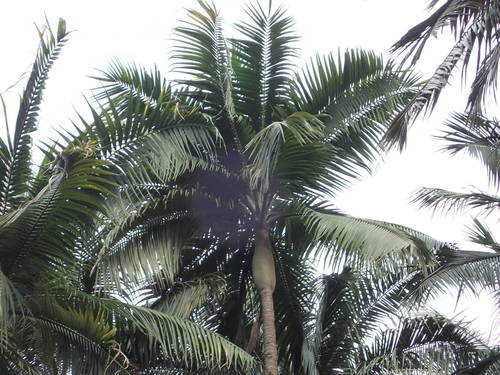
(c) jmoralesrbpc, some rights reserved (CC BY-NC), uploaded by jmoralesrbpc

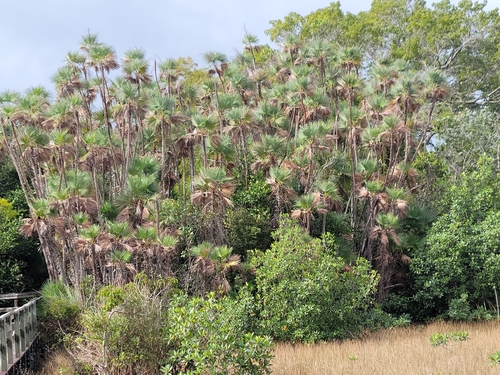
(c) grinnin, some rights reserved (CC BY-NC)

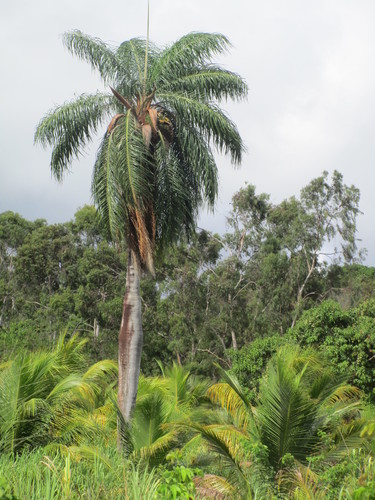
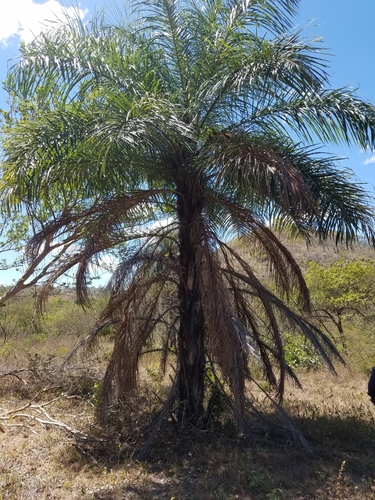
(c) grinnin, some rights reserved (CC BY-NC)
Where to Find It
It is a tropical plant.
Asia, Belize, Central America, Cuba, Mexico, North America, Singapore, West Indies,
How to Identify
A palm.
How to Grow
Plants can be grown in the tropics and subtropics. Grows best in a sunny position. Prefers a moist, but well drained soil. A slow growing plant.
Propagation: Seed - germinates easily if sown fresh.
Other Uses
The leaves are used for thatching. The thatch can last for 15 years or more. The leaves are used for weaving hats, mats, etc.
Wikipedia
Source ↗Sabal yapa is a species of palm that grows in Belize, Guatemala, western Cuba, and the Yucatan Peninsula region of Mexico (Yucatán, Campeche, Quintana Roo). It prefers limestone-based calcareous soils. It is often described as a palmetto palm as it has costapalmate fronds, which are a transition phase between fan palms and feather-leaved palms.
Names & Synonyms
Botan
References (1)
- Grandtner, M. M., 2008, World Dictionary of Trees. Wood and Forest Science Department. Laval University, Quebec, Qc Canada. (Internet database http://www.wdt.qc.ca)