Clinostigma ponapense
(Becc.) H. E. Moore & Fosberg
Kotop
ArecaceaeShoots

gbif · cc-by
Royal Botanic Gardens, Kew
Royal Botanic Gardens, Kew

gbif · cc-by
The New York Botanical Garden
The New York Botanical Garden

gbif · cc-by
The New York Botanical Garden
The New York Botanical Garden
What to Eat
Edible parts: Palm heart, Cabbage
The palm heart and cabbage are edible portions.
Where to Find It
It is a tropical plant. In Pohnpei it grows between 450-600m altitude. It needs moist well drained soil.
Australia, Caroline Islands, Hawaii, Micronesia, Pacific, Pohnpei,
Countries: Australia, Fiji, Micronesia, Kiribati, Marshall Islands, Nauru, New Zealand, Papua New Guinea, Palau, Solomon Islands, Tonga, Tuvalu, United States, Vanuatu, Samoa
How to Identify
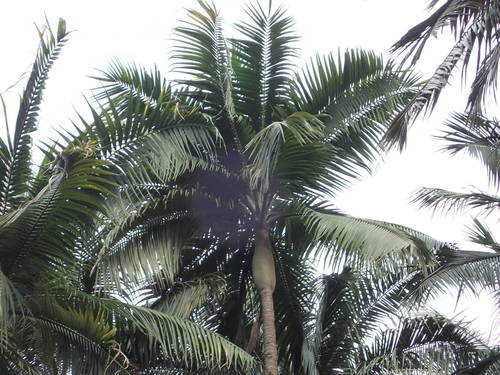
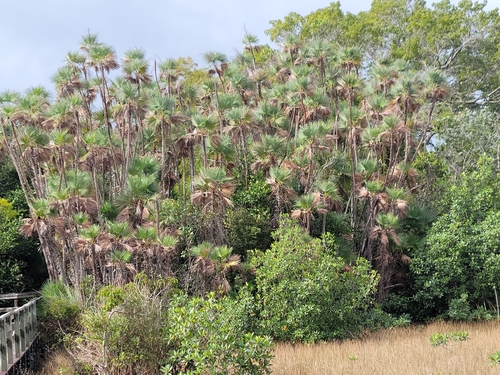
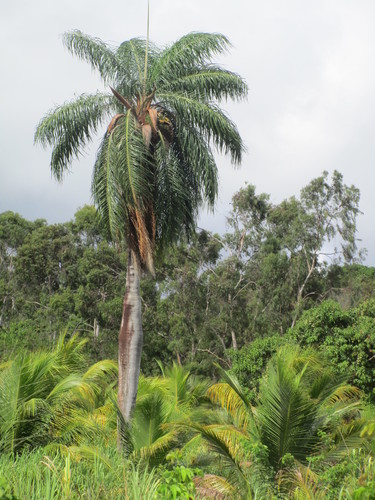
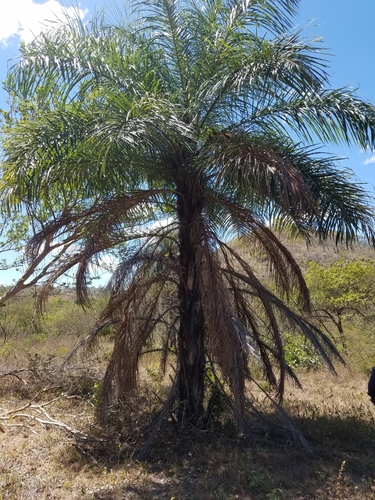
A palm. It grows 20 m tall. It has evenly spaced rings. The trunk is white with a light green crownshaft. The crown spread 4.6 m wide. The leaves have fine drooping leaflets along the stalk. It can have stilt roots.
Names & Synonyms
Kedei, Kotop
Bentinckiopsis ponapensis Becc.Exorrhiza ponapensis (Becc.) Burret
References (5)
- Englberger, L., et al, 2006, Documentation of the traditional food system of Pohnpei. Indigenous People's food systems. Chp 6 p 119
- Kuhnlein, H. V., et al, 2009, Indigenous Peoples' food systems. FAO Rome p 131
- Palmpedia.
- Waltu, D., 2000, Clinostigma ponapensis. On line at www.comfsm.fm~dleeling/botany/ 2000/vhp/clinostigma_ponapensis.html
- www.manoa.hawaii.edu/botany/plants of micronesia