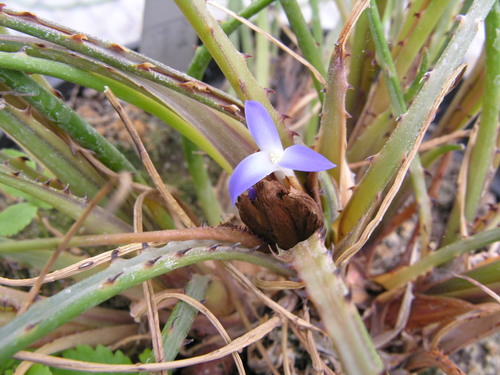
Bromelia plumieri
(E. Morren) L. B. Smith
Pina pico, Wild pine
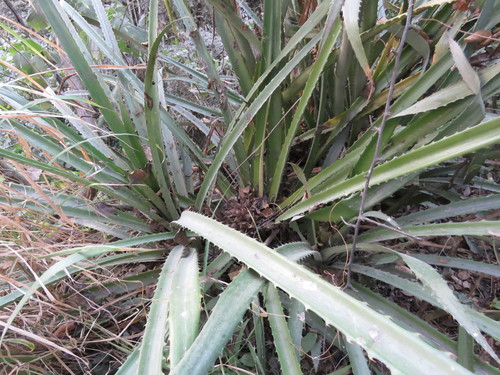
(c) Emmanuel Guevara Lazcano, some rights reserved (CC BY-NC-SA)
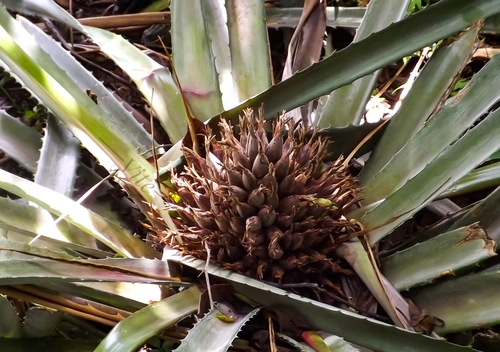
(c) Daniel Vite, some rights reserved (CC BY-NC)
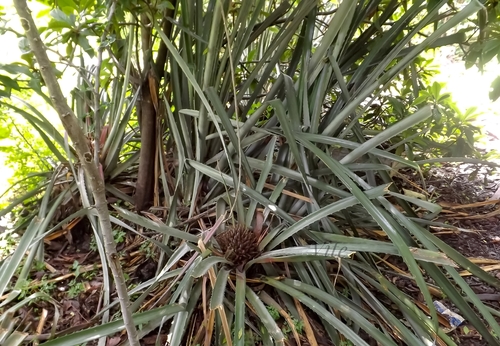
(c) Daniel Vite, some rights reserved (CC BY-NC)
What to Eat
Edible parts: Leaves, Fruit, Bulb, Flowers
The fruit are eaten raw or used for juice; the skin must be peeled and the fruit is eaten with salt to prevent mouth irritation from the sap. The bulbs are cooked, sun-dried, then ground into flour. Young flower stalks are eaten as a vegetable.
Known Hazards
Where to Find It
A tropical plant. It does well in shade.
Australia, Belize, Brazil, Central America, Colombia, Costa Rica, Dominica, Ecuador, Guiana, Guianas, Guyana, Mexico, Nicaragua, North America, SE Asia, Singapore, South America, Suriname, Venezuela, West Indies,
How to Identify
It is a large herb. The leaves are arranged in rings. It has suckers around it. The leaves are 3 m long. The edges of the leaves have curved spines. The fruit are yellow. It is like a pineapple. They occur in large clusters near the ground.
Notes
There are 51 Bromelia species. They grow in tropical America.
References (14)
- Altschul, S.V.R., 1973, Drugs and Foods from Little-known Plants. Notes in Harvard University Herbaria. Harvard Univ. Press. Massachusetts. no. 177
- Andel T. van, 2000, Non-timber forest products of the North-West District of Guyana. Part 2. A Field Guide. Tropenbos-Guyana Programme. p 255
- Burkill, I.H., 1966, A Dictionary of the Economic Products of the Malay Peninsula. Ministry of Agriculture and Cooperatives, Kuala Lumpur, Malaysia. Vol 2 (I-Z) p 1299
- DE CASTRO, (As Bromelia caratas (L.) Hill)
- Hibbert, M., 2002, The Aussie Plant Finder 2002, Florilegium. p 47
- Kermath, B. M., et al, 2014, Food Plants in the Americas: A survey of the domesticated, cultivated and wild plants used for Human food in North, Central and South America and the Caribbean. On line draft. p 146
- Kiple, K.F. & Ornelas, K.C., (eds), 2000, The Cambridge World History of Food. CUP p 1835
- Martin, F.W. & Ruberte, R.M., 1979, Edible Leaves of the Tropics. Antillian College Press, Mayaguez, Puerto Rico. p 180
- Phytologia 15:173, t. 2. 1967
- Recher, P, 2001, Fruit Spirit Botanical Gardens Plant Index. www.nrg.com.au/~recher/ seedlist.html p 1 (As Bromelia karatas)
- Segura, S. et al, 2018, The edible fruit species in Mexico. Genet Resour Crop Evol (2018) 65:1767–1793
- Torre, de la, L., et al, 2008, Enciclopedia de las Plantas Útiles del Ecuador. Herbario QCA. Pontificia Universidad Católica del Ecuador. p 260
- Van den Eynden, V., et al, 2003, Wild Foods from South Ecuador. Economic Botany 57(4): 576-603
- Zuchowski W., 2007, Tropical Plants of Costa Rica. A Zona Tropical Publication, Comstock Publishing. p 371