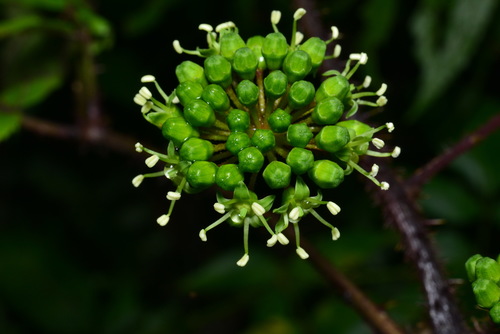
Schefflera abyssinica
(A. Rich.) Harms
(c) Odile Weber, some rights reserved (CC BY-NC)
(c) Odile Weber, some rights reserved (CC BY-NC)
(c) Odile Weber, some rights reserved (CC BY-NC)
Where to Find It
It is a tropical plant. It grows in mid altitude and mountain rainforest. It suits humid locations. In Malawi it grows between 1,200-2,000 m altitude.
Africa, Cameroon, Central Africa, Congo, East Africa, Ethiopia, Malawi, Nigeria, West Africa, Zambia,
How to Identify
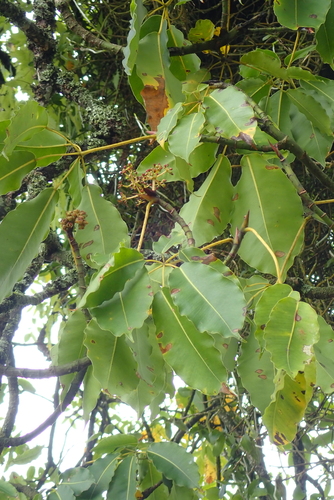
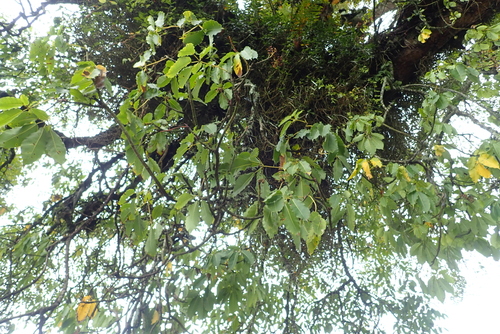
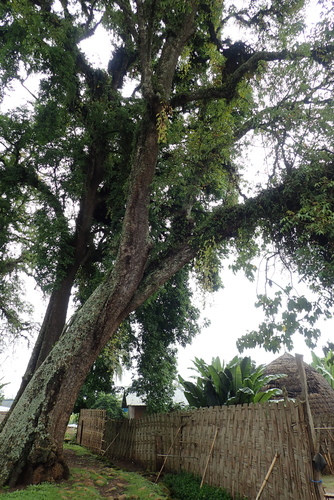
A straggling plant that grows attached to other plants. It can grow 25 m high. It can be a small tree about 12 m high. The leaves have leaflets like fingers on a hand. There are 5-7 leaflets. They are 25 cm long by 15 cm wide. They are broadly oval. There are teeth along the edge and can be slightly wavy. The clusters of flowers can be 15-30 cm long and rusty. The fruit are 5 mm long.
How to Grow
Propagation: Seed - it does not require pre-treatment, and usually starts to germinate within 2 weeks of sowing. Cuttings - taken at the end of the rainy season.
Medicinal Uses
The leaves and young shoots are pounded and used as medicine for small pox. Some triterpene saponins have been isolated from the leaves.
Other Uses
The heartwood is yellowish brown; it is indistinctly demarcated from the sapwood. The texture is coarse. The wood is light in weight, soft and easy to work. It is used for furniture, boxes, water pots and agricultural implements. It is suitable for the inner layers of plywood. The wood is occasionally used for fuel. The plant is used as a living fence. The flowers are a good source of nectar and pollen for bees.
Notes
Probably edible.
Names & Synonyms
References (3)
- Flora Zambesiaca. http://apps.kew.org/efloras
- Molla, A., Ethiopian Plant Names. http://www.ethiopic.com/aplants.htm
- White, F., Dowsett-Lemaire, F. and Chapman, J. D., 2001, Evergreen Forest Flora of Malawi. Kew. p 156