Uvaria angolensis
Welw. ex Oliv.
Boyinya

(c) Carel Jongkind, some rights reserved (CC BY-NC), uploaded by Carel Jongkind
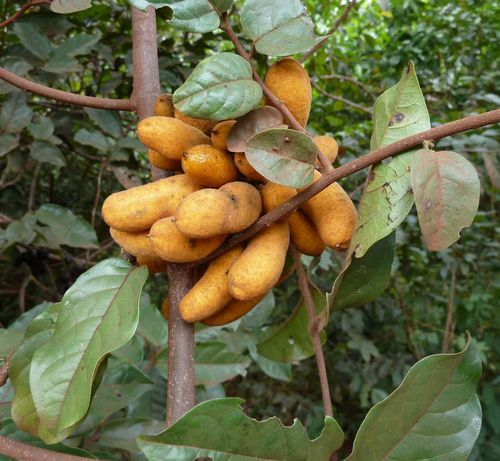
(c) Carel Jongkind, some rights reserved (CC BY-NC), uploaded by Carel Jongkind
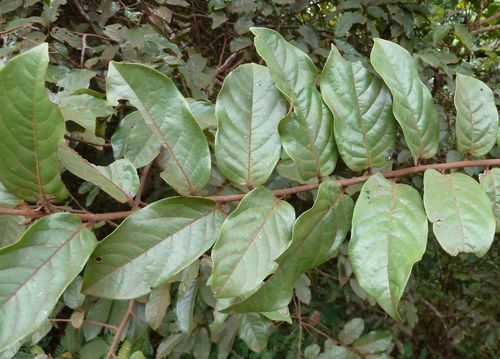
(c) Carel Jongkind, some rights reserved (CC BY-NC), uploaded by Carel Jongkind
What to Eat
Edible parts: Fruit, Seed, Nuts
The hard shell is removed and the inner flesh and seed kernel are eaten, particularly by children.
Where to Find It
It is a tropical plant. In Ethiopia it grows in the lowlands. It grows in dry forest. In Zambia it has been recorded at 1,355 m above sea level.
Africa, Angola, Burundi, Cameroon, Central Africa, Congo, East Africa, Ethiopia, Tanzania, Zambia,
How to Identify
A small tree or climbing shrub. It can grow 6 m long. The bark is dark. Young branches have rusty hairs. The leaves are oblong and 4-14 cm long by 2-6 cm wide. They taper to a short tip. The flowers can occur singly or in groups of 2-3. They are yellow to orange. The fruit are yellow when ripe. The fruit are 1.2-5 cm long and 0.8-2 cm wide. The seeds are shing brown.
Nutrition Score: 24/100
| Part | Moisture | kJ | kcal | Protein | Vit A | Vit C | Iron | Zinc |
|---|---|---|---|---|---|---|---|---|
| Fruit | 40 | 440 | 105 | 1.3 | — | — | — | — |
| Nuts | 20 | 397 | 95 | 0.6 | — | — | 0.2 | — |
How to Grow
Plants can be grown from seed.
Other Information
The fruit are eaten especially by children.
Names & Synonyms
Boyinya, Mukakankuri
References (6)
- Ethiopia: Famine Food Field Guide. http://www.africa.upenn.edu/faminefood/category3.htm
- Flora Zambesiaca. http://apps.kew.org/efloras
- Fowler, D. G., 2007, Zambian Plants: Their Vernacular Names and Uses. Kew. p 8
- Lulekal, E., et al, 2011, Wild edible plants in Ethiopia: a review on their potential to combat food insecurity. Afrika Focus - Vol. 24, No 2. pp 71-121
- Malaisse, F., 1997, Se nourrir en floret claire africaine. Approche ecologique et nutritionnelle. CTA., p 69
- World Checklist of Useful Plant Species 2020. Royal Botanic Gardens, Kew


