Papaver dubium
L.
Long-headed poppy

(c) Norbert Sauberer, some rights reserved (CC BY-NC), uploaded by Norbert Sauberer

(c) identigy, some rights reserved (CC BY-NC), uploaded by identigy
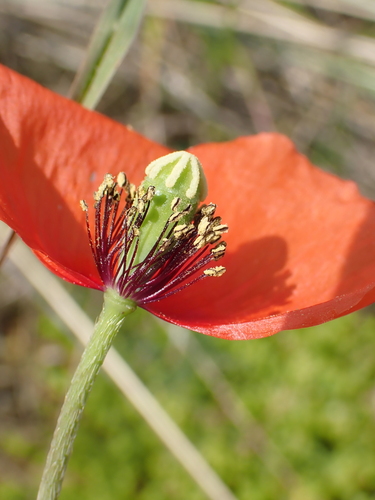
no rights reserved, uploaded by Robert H. Wardell
What to Eat
Edible parts: Leaves, Flower petals
None known.
Known Hazards
Where to Find It
It is a temperate plant. In Argentina it grows below 500 m above sea level.
Argentina, Asia, Australia, Britain, Chile, Europe, Falklands, Himalayas, Luxembourg, Nepal, North America, Pakistan, South America, Spain, Tasmania, Turkey, Türkiye, Uruguay,
How to Identify
An annual herb. It grows 30-60 cm tall. It can have a few branches from low down. The latex is milky. The leaves are divided into deep lobes. They are 7-15 cm long by 2-3 cm wide. The flower buds are oval. The flowers are 2-3 cm across. They are at the end of the branches. They are pink or red with a dark blotch. The fruit is an oblong capsule. It is 15-20 mm long. The seeds are very small.
How to Grow
Prefers a well-drained sandy loam in a sunny position. Does not do well on wet clay soils but succeeds in most other soils. This species is possibly more tolerant of poor soils than P. rhoeas. Plants usually self-sow freely when growing in suitable conditions so long as the soil surface is disturbed. When growing in cereal fields, poppies decrease the yields of nearby cereal plants. Members of this genus are rarely if ever troubled by browsing deer or rabbits.
Propagation: Sow seed in spring in situ.
Medicinal Uses
The plant is sudorific.
Other Uses
None known.
Wikipedia
Source ↗Papaver dubium is a species of poppy known by the common names long-headed poppy and blindeyes. It is an annual species which prefers sandy soils without lime. It is native to Europe, North Africa and south-western Asia and widespread as an introduction in America and elsewhere.
Names & Synonyms
Amapola, Bayrak, Gelincik, Hanimeli, Kopekyagi, Lale, Meskuk hashasi
References (10)
- Ari, S., et al, 2015, Ethnobotanical survey of plants used in Afyonkarahisar-Turkey. Journal of Ethnobiology and Ethnomedicine 11:84
- Blanco-Salas, J., et al, 2019, Wild Plants Potentially Used in Human Food in the Protected Area “Sierra Grande de Hornachos” of Extremadura (Spain). Sustainability 2019, 11, 456
- Dogan, Y., 2012, Traditionally used wild edible greens in the Aegean Region of Turkey. Acta Societatis Botanicorum Poloniae 81(4): 329-342
- Ertug, F., 2004, Wild Edible Plants of the Bodrum Area. (Mugla, Turkey). Turk. J. Bot. 28 (2004): 161-174
- Ertug, F, Yenen Bitkiler. Resimli Türkiye Florası -I- Flora of Turkey - Ethnobotany supplement
- Hancer, C. K., et al, 2020, Traditional Knowledge of Wild Edible Plants of Biga (Çanakkale), Turkey. Acta Societatis Botanicorum Poloniae / 2020 / Volume 89 / Issue 1 / Article 8914
- Irving, M., 2009, The Forager Handbook, A Guide to the Edible Plants of Britain. Ebury Press p 253
- Senkardes, I & Tuzlaci, E., 2016, Wild Edible Plants of Southern Part of Nevsehir inTurkey. Marmara Pharmaceutical Journal 20:34-43
- Tasmanian Herbarium Vascular Plants list p 42
- Upson, R., & Lewis R., 2014, Updated Vascular Plant Checklist and Atlas for the Falkland Islands. Falklands Conservation and Kew.