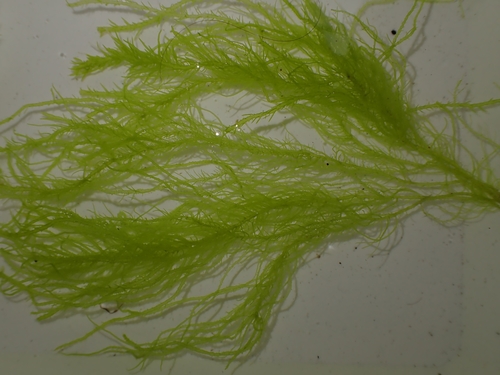
Ulva reticulata
Forsskal

iNaturalist · cc-by-nc-nd
(c) Blogie Robillo, some rights reserved (CC BY-NC-ND), uploaded by Blogie Robillo
(c) Blogie Robillo, some rights reserved (CC BY-NC-ND), uploaded by Blogie Robillo

wikimedia · cc0
Wikimedia Commons - Okamura, Kintaro
Wikimedia Commons - Okamura, Kintaro
What to Eat
Edible parts: Seaweed, Fronds
The fronds are eaten fresh in salads.
Where to Find It
It grows in tropical and temperate places.
Antarctica, Asia, Indochina, Papua New Guinea, PNG, SE Asia, Taiwan, Thailand, Vietnam,
Countries: United Arab Emirates, Afghanistan, Armenia, Azerbaijan, Bangladesh, Bahrain, Brunei, Bhutan, China, Georgia, Indonesia, Israel, India, Iraq, Iran, Jordan, Japan, Kyrgyzstan, Cambodia, North Korea, South Korea, Kuwait, Kazakhstan, Laos, Lebanon, Sri Lanka, Myanmar, Mongolia, Maldives, Malaysia, Nepal, Oman, Papua New Guinea, Philippines, Pakistan, Qatar, Saudi Arabia, Singapore, Syria, Thailand, Tajikistan, Timor-Leste, Turkmenistan, Turkey, Taiwan, Uzbekistan, Vietnam, Yemen
How to Identify
A red seaweed in the Ulvaceae family found in tropical and temperate waters. The plant consists of fronds suitable for culinary use.
Nutrition Score: 5/100
| Part | Moisture | kJ | kcal | Protein | Vit A | Vit C | Iron | Zinc |
|---|---|---|---|---|---|---|---|---|
| Seaweed | — | — | 21.1 | — | — | — | — | — |
References (6)
- Cherry, P., et al, 2019, Risks and benefits of consuming edible seaweeds. Nutrition ReviewsVR Vol. 77(5):307–329
- http://www.seavegetables.com
- Lee, B., 2008, Seaweed Potential as a marine vegetable. RIRDC Publication No. 08/009
- Pereira, L., 2011, A Review of the Nutrient Composition of Selected Edible Seaweeds. In Seaweed. Pomin V. H., (Ed.) Nova Science Publishers, Inc
- Wang, Wei-Lung and Chiang, Young-Meng, 1994, Potential Economic Seaweeds of Hengchun Peninsula, Taiwan, Economic Botany, Vol. 48, No. 2, pp. 182-189
- Zemke-White, W. L. & Ohno, M., 1999, World seaweed utilisation: An end-of-century summary. Journal of Applied Phycology 11: 369-376