Trithrinax schizophylla
Drude
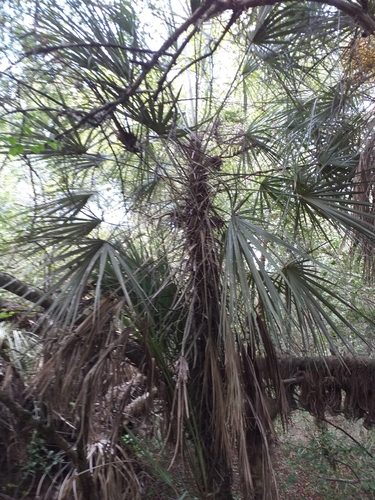
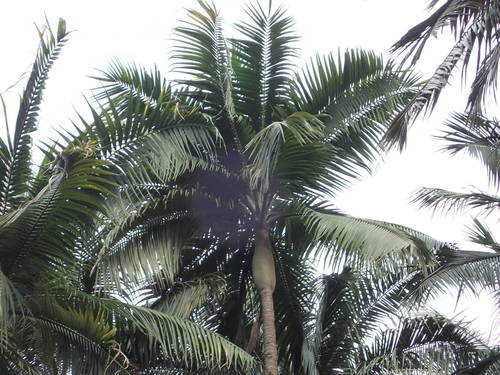
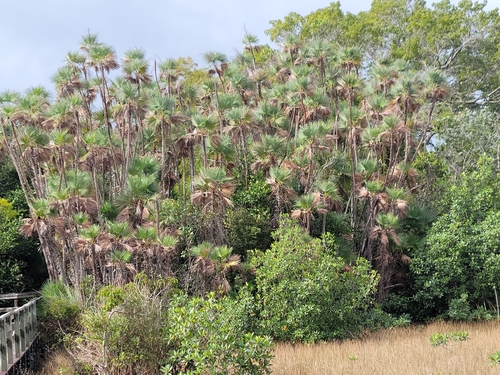
(c) Leandro Bareiro Guiñazú, some rights reserved (CC BY-NC), uploaded by Leandro Bareiro Guiñazú

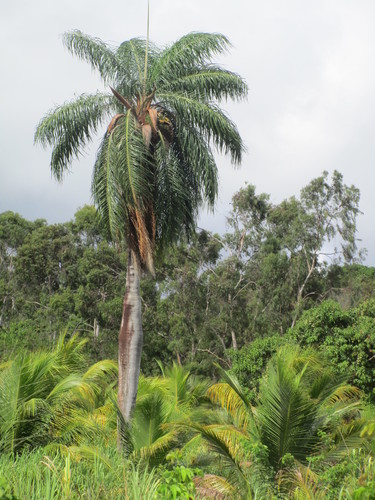
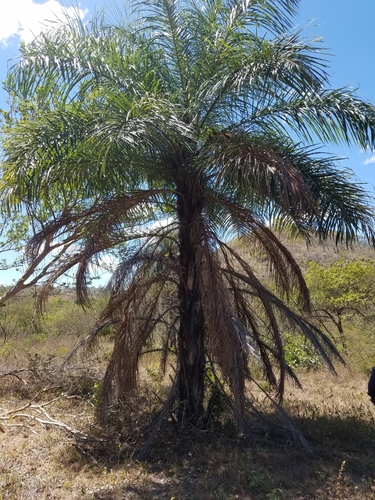
(c) Martin Lowry, some rights reserved (CC BY-NC)
What to Eat
Edible parts: Palm heart, Cabbage
The palm heart is cooked with several changes of water to remove bitterness and is often eaten with honey.
Where to Find It
It is a subtropical plant. In Argentina it grows between 200-1,400 m above sea level.
Argentina, Bolivia, Brazil, Paraguay, South America*,
How to Identify
A subtropical palm native to Argentina, growing between 200-1,400 m above sea level.
How to Grow
A plant of the tropics and subtropics, it can tolerate several degrees of frost and hot season temperatures up to 45°c. Succeeds in full sun to light shade, preferring some shade when young and more sun as it grows larger. Prefers a moist, sandy soil. Plants have a relatively fast rate of growth.
Propagation: Seed - the small, round seeds are difficult to germinate. They need some cool during the night for good germination.
Other Uses
The leaves are used for thatching. The leaves are used for making baskets and hats. The stems are used in constructing traditional houses.
Names & Synonyms
Carandai, Carandilla
References (3)
- Bortolotto, I. M., et al, 2018, Lista preliminar das plantas alimenticias nativas de Mato Grosso do Sul, Brasil. Iheringia, Serie Botanica, Porto Alegre, 73 (supl.):101-116
- Polini, G., et al, Useful and edible plants of Paraguay Region of Chaco. p 24
- Schmedia-Hirschmann, G., 1994, Plants resources Used by the Ayoreo of the Paraguayan Chaco. Economic Botany Vol. 48. No. 3. pp. 252-258