Paris verticillata
Bieb.
Sakkannamul
MelanthiaceaeLeaves
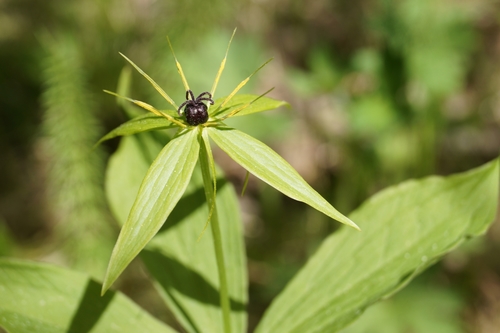
iNaturalist · cc-by-nc
(c) Вероника Белова, some rights reserved (CC BY-NC), uploaded by Вероника Белова
(c) Вероника Белова, some rights reserved (CC BY-NC), uploaded by Вероника Белова
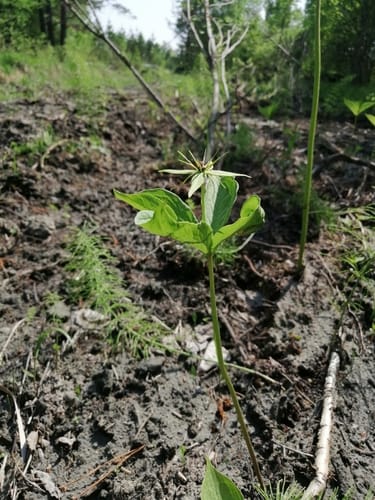
iNaturalist · cc0
no rights reserved
no rights reserved
What to Eat
Edible parts: Leaves
The new shoots and leaves are eaten.
Where to Find It
It is a temperate plant. It grows in forests, thickets and in grassy and shady places between 1,100-3,600 m above sea level in China.
Asia, China, Japan, Korea, Mongolia, Russia, Siberia,
Countries: United Arab Emirates, Afghanistan, Armenia, Azerbaijan, Bangladesh, Bahrain, Brunei, Bhutan, China, Georgia, Indonesia, Israel, India, Iraq, Iran, Jordan, Japan, Kyrgyzstan, Cambodia, North Korea, South Korea, Kuwait, Kazakhstan, Laos, Lebanon, Sri Lanka, Myanmar, Mongolia, Maldives, Malaysia, Nepal, Oman, Philippines, Pakistan, Qatar, Russia, Saudi Arabia, Singapore, Syria, Thailand, Tajikistan, Timor-Leste, Turkmenistan, Turkey, Taiwan, Uzbekistan, Vietnam, Yemen
How to Identify
A herb. It grows 25-60 cm tall. It has a slender rhizome. There are 6-8 leaves. They are narrowly oval and 7-15 cm long by 2-5 cm wide. The base is wedge shaped. The flower stalk is 5-12 cm long. The flowers are green and yellow-green.
Notes
Also put in the family Liliaceae.
Names & Synonyms
Satgatnamul
References (3)
- Kim, H. & Song, M., 2013, Ethnobotanical analysis for traditional knowledge of wild edible plants in North Jeolla Province (Korea). Genetic. Resour. Crop Evol. (2013) 60:1571-1585
- Pemberton, R. W. & Lee, N. S., 1996, Wild Food Plants in South Korea: Market Presence, New Crops, and Exports to the United States. Economic Botany, Vol. 50, No. 1, pp. 57-70
- Urgamal, M., et al, 2014, Conspectus of the Vascular Plants of Mongolia. Mongolia Academy of Sciences Institute of Botany and National University of Mongolia Department of Biology. p 40
More from Melanthiaceae

Chionographis japonica

Paris polyphylla
Herb Paris

Paris polyphylla var. yunnanensis
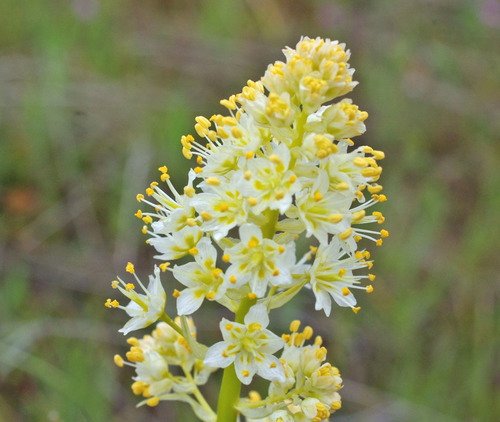
Toxicoscordion paniculatum
Foothill deathcamas

Trillium erectum
Beth root, Stinking Benjamin, Purple trillium, Birthroot, Red trillium

Trillium grandiflorum
White trilium, Wake robin, White wake robin, Grand trillium, Showy trillium, Large-flowered trillium