Lithocarpus fenestratus
Rehd.
Zi pia
FagaceaeSeeds/Nuts

iNaturalist · cc-by-nc
(c) tkp123, some rights reserved (CC BY-NC)
(c) tkp123, some rights reserved (CC BY-NC)
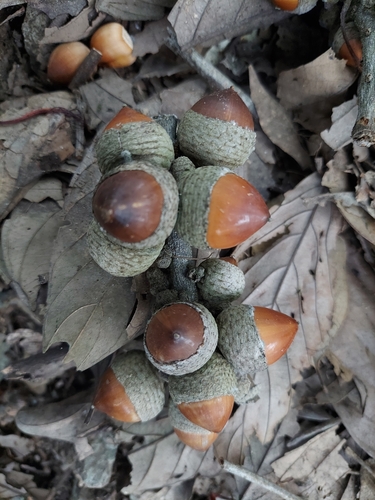
iNaturalist · cc-by-nc
(c) Phuentsho, some rights reserved (CC BY-NC)
(c) Phuentsho, some rights reserved (CC BY-NC)
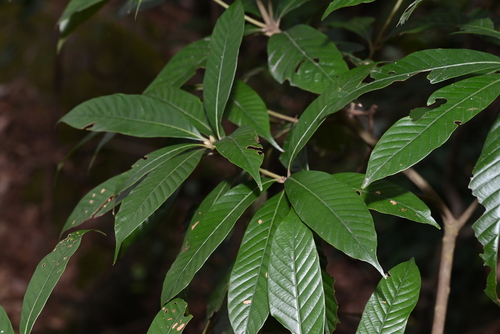
iNaturalist · cc-by-nc
(c) johnchau, some rights reserved (CC BY-NC)
(c) johnchau, some rights reserved (CC BY-NC)
What to Eat
Edible parts: Seeds, Nuts
The seeds and nuts are eaten.
Where to Find It
It is a subtropical plant. In Sikkim it grows between 800-2,000 m above sea level.
Asia, China, Himalayas, India, Myanmar, Northeastern India, SE Asia, Sikkim,
Countries: United Arab Emirates, Afghanistan, Armenia, Azerbaijan, Bangladesh, Bahrain, Brunei, Bhutan, China, Georgia, Indonesia, Israel, India, Iraq, Iran, Jordan, Japan, Kyrgyzstan, Cambodia, North Korea, South Korea, Kuwait, Kazakhstan, Laos, Lebanon, Sri Lanka, Myanmar, Mongolia, Maldives, Malaysia, Nepal, Oman, Philippines, Pakistan, Qatar, Saudi Arabia, Singapore, Syria, Thailand, Tajikistan, Timor-Leste, Turkmenistan, Turkey, Taiwan, Uzbekistan, Vietnam, Yemen
How to Identify
A tree. It grows 25-30 m tall. The new branches are hairy. The leaves are oval to sword shaped and 5-22 cm long by 2-7 cm wide. The flowering shoots are 18 cm long. The cups with fruit are in clusters of 3. The nut is a flattened round shape.
Names & Synonyms
Arkhaulo, Kamyin, Ta-en, Thitcha, Thit-e, Thitpayaung, Tsahkai
Quercus fenestrata Roxb.and others
References (3)
- Fu, Yongneng, et al, 2003, Relocating Plants from Swidden Fallows to Gardens in Southwestern China. Economic Botany, 57(3): 389-402
- Sharma, G., et al, 2016, Agrobiodiversity in the Sikkim Himalaya. International Centre for Integrated Mountain Development, ICIMOD Working Paper 2016/5 p 20 (As Quercus fenestrata)
- Sundriyal, M. & Sundriyal, R. C., 2004, Structure, Phenology, Fruit Yield, and Future Prospects of some Prominent Wild Edible Plant Species of the Sikkim Himalaya, India. Journal of Ethnobiology 24(1): 113-138 (As Quercus fenestrata)
More from Fagaceae

Castanea alnifolia
Bush chinkapin, Florida chinkapin, Trailing chinkapin, Downy chinquapin

Castanea crenata
Japanese chestnut

Castanea dentata
American chestnut, American sweet chestnut

Castanea henryi
Zhui li, Conic chestnut
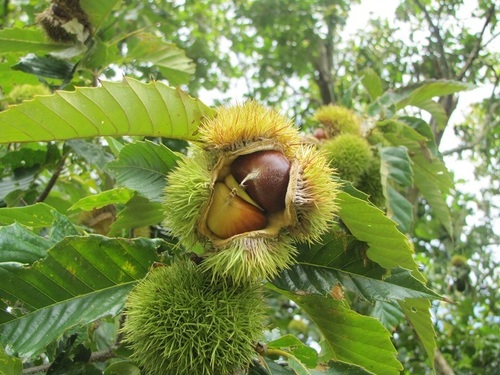
Castanea mollissima
Chinese chestnut

Castanea ozarkensis
Ozark chinkapin, Ozark chestnut