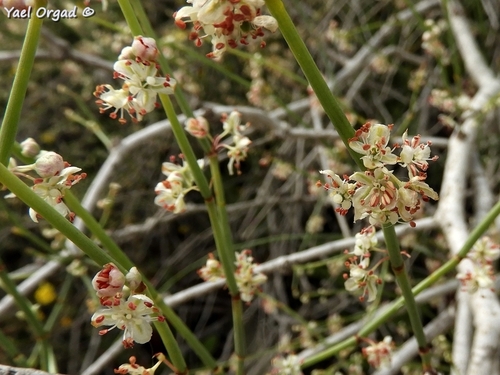
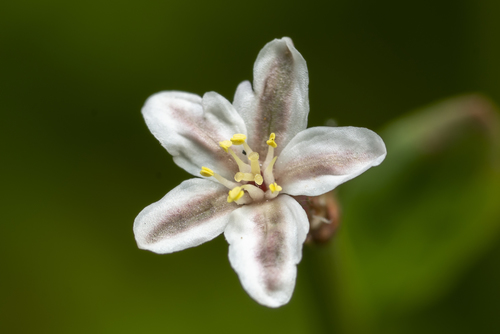
Polygonum equisetiforme
Sibth. & Smith
Gudhabah
(c) Eleftherios Katsillis, some rights reserved (CC BY), uploaded by Eleftherios Katsillis

(c) fotis-samaritakis, some rights reserved (CC BY-NC)

(c) fotis-samaritakis, some rights reserved (CC BY-NC)
What to Eat
Edible parts: Leaves - flavouring
The plant is used as a flavouring for tea.
Known Hazards
Where to Find It
It grows in Mediterranean climates. It can grow in salty soils. It can grow in arid places.
Africa, Armenia, Asia, Azerbaijan, Balkans, Bulgaria, Caucasus, Central Asia, Egypt, Europe, Georgia, Greece, Iran, Israel, Italy, Kazakhstan, Korea, Mediterranean, Middle East, North Africa, Sinai, Spain, Tajikistan, Turkey, Türkiye,
How to Identify
An evergreen perennial growing 1 m tall and wide, hardy to UK zone 8. Foliage remains year-round with hermaphroditic, insect-pollinated flowers blooming August to October. Tolerates light sandy, medium loamy, and heavy clay soils across mildly acidic to mildly alkaline pH, including saline soils. Requires full sun and adapts to dry or moist conditions. Withstands strong winds but not coastal salt spray.
How to Grow
Succeeds in an ordinary garden soil but prefers a moisture retentive not too fertile soil in sun or part shade. Repays generous treatment. Somewhat tender in Britain, it is apt to be cut back in severe winters and should be given a position in a warm sunny corner. It probably tolerates temperatures down to between -5 and -10°c. Plants seem to be immune to the predations of rabbits.
Propagation: Sow seed in spring in a cold frame; germination is generally free and easy. Once seedlings are large enough to handle, prick them out into individual pots and plant out during summer if they have reached sufficient size, or overwinter in a cold frame and plant out the following spring after the last expected frosts. Division can be done in spring or autumn — larger divisions can go directly into permanent positions, while smaller ones do better potted up and grown on in light shade in a cold frame until well established before planting out in late spring or early summer.
Medicinal Uses
None known
Other Uses
Plants can be used as a ground cover when spaced approximately 60 cm apart in each direction.
Wikipedia
Source ↗An evergreen perennial growing 1 m tall and wide, hardy to UK zone 8. Foliage remains year-round with hermaphroditic, insect-pollinated flowers blooming August to October. Tolerates light sandy, medium loamy, and heavy clay soils across mildly acidic to mildly alkaline pH, including saline soils. Requires full sun and adapts to dry or moist conditions. Withstands strong winds but not coastal salt spray.