Cavendishia nitida
(Humboldt, Bonpland & Kunth) A. C. Smith
Uva camarona
EricaceaeFruit
iNaturalist · cc-by-nc-sa
(c) Mateo Hernandez Schmidt, some rights reserved (CC BY-NC-SA), uploaded by Mateo Hernandez Schmidt
(c) Mateo Hernandez Schmidt, some rights reserved (CC BY-NC-SA), uploaded by Mateo Hernandez Schmidt
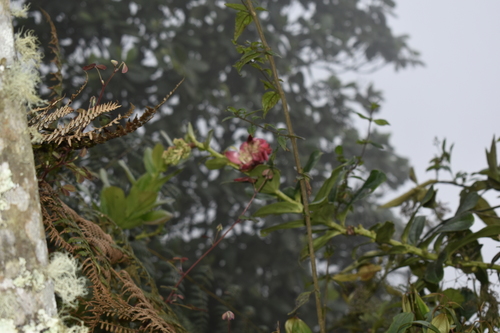
iNaturalist · cc-by-nc
(c) expedicionario, some rights reserved (CC BY-NC)
(c) expedicionario, some rights reserved (CC BY-NC)

iNaturalist · cc-by-nc
(c) aezanne, some rights reserved (CC BY-NC)
(c) aezanne, some rights reserved (CC BY-NC)
What to Eat
Edible parts: Fruit
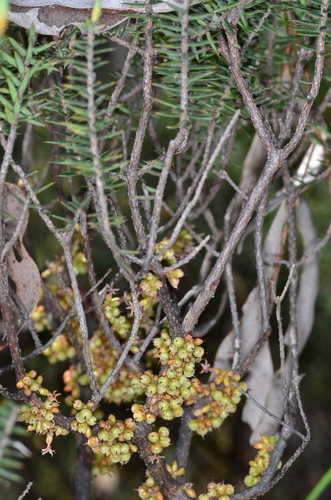
The berries are edible and are sold in local markets.
Where to Find It
It is a tropical plant. It grows between 2,000-3,000 m altitude in Colombia.
Andes, Colombia, South America,
How to Identify
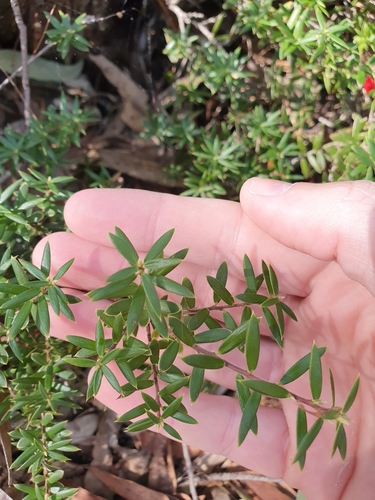
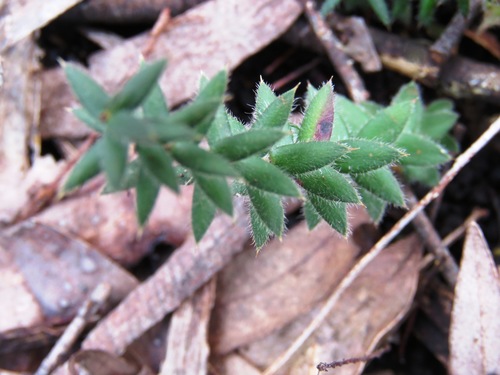
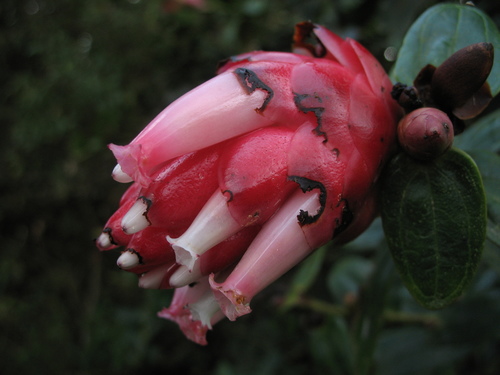
A shrub. It grows 2-5 m high. The base can be 10 cm across. The branches are scrambling or like vines. The branches are coarsely angled. The leaves are clustered at the base of new growth. The leaves are oval and 6-14 cm long by 3-5 cm wide. The flower clusters are nodding and there are 16-20 flowers in a group. The fruit is a berry 15 mm across.
Other Information
The fruit are sold in local markets.
Names & Synonyms
Cavendishia obtusa A. C. SmithThibaudia nitida Kunth
References (4)
- Lopez-Diago, D. & Garcia, N., 2021, Wild edible fruits of Colombia. Biota ColomBiana 22 (2) p 35
- Luteyn, J. L., 1983, Ericaceae: Part I. Cavendishia: Flora Neotropica, Vol. 35, Ericaceae: Part I. Cavendishia. pp. 1-289
- Ramirez, D. L. A., 2010, Las Ericaceas Con Frutos Comestibles del Altiplano Cundiboyacense. Pontificia Univerisidad Javeriana, Bogota.
- Roa, J. A. G. & Boada, D. S. G., 2018, Fundación para el Fortalecimiento de la Fruticultura y Plantas Alimenticias no Convencionales en Colombia.