Moquilea maritima
(Prance) Sothers & Prance
Maritime licania

gbif · cc0
Ingrid P. Lin
Ingrid P. Lin

gbif · cc-by
The New York Botanical Garden
The New York Botanical Garden
What to Eat
Edible parts: Fruit
The fruit are eaten.
Known Hazards
Where to Find It
It is a tropical plant. It grows in coastal forests.
Colombia, South America,
How to Identify
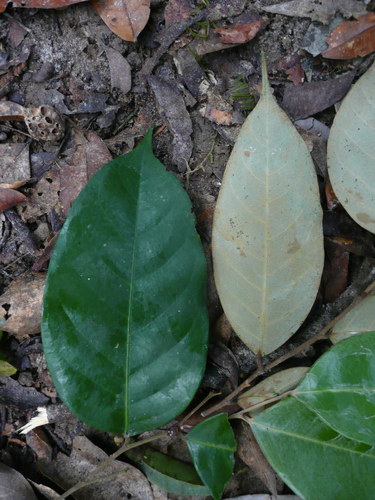
A tree. Young branches are hairy. The leaves are narrowly oval and 23-30 cm long by 7-10 cm wide. The fruit is round and has a warty surface. They are 9-10 cm across.
Production
It flowers Jan to May.
Notes
It is an endangered species.
Names & Synonyms
Licania maritima Prance
References (5)
- Grandtner, M. M. & Chevrette, J., 2013, Dictionary of Trees, Volume 2: South America: Nomenclature, Taxonomy and Ecology. Academic Press p 352 (As Licania maritima)
- Kew Plants of the World Online
- Prance, G. T., 1972, Chrysobalanaceae in Flora Neotropica Vol. 9 (Suppl.) Hafner. p 20 (As Licania maritima)
- Prance and Species Plantarum - Flora of the World. (As Licania maritima)
- Roa, J. A. G. & Boada, D. S. G., 2018, Fundación para el Fortalecimiento de la Fruticultura y Plantas Alimenticias no Convencionales en Colombia. (As Licania maritima)