Cola buntingii
Baker f.
Bush kola
MalvaceaeFruit

iNaturalist · cc-by-nc
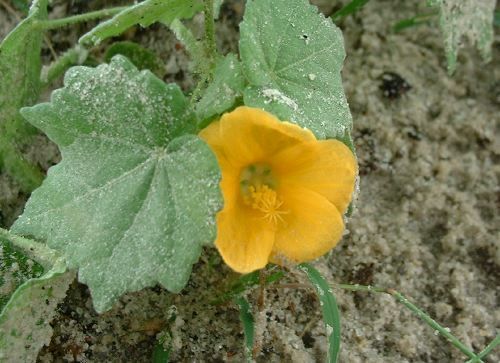
(c) Ehoarn Bidault, some rights reserved (CC BY-NC), uploaded by Ehoarn Bidault
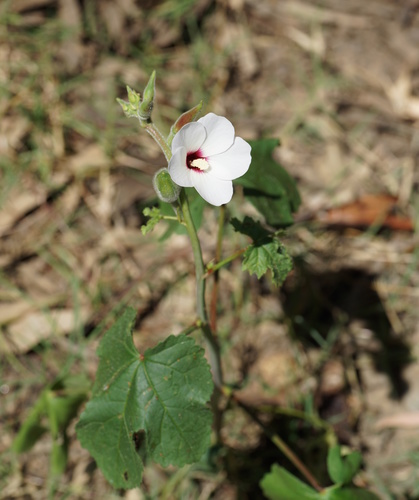
(c) Ehoarn Bidault, some rights reserved (CC BY-NC), uploaded by Ehoarn Bidault
iNaturalist · cc-by-nc
(c) Tarik Bodasing, some rights reserved (CC BY-NC)
(c) Tarik Bodasing, some rights reserved (CC BY-NC)

iNaturalist · cc-by-nc
(c) Ehoarn Bidault, some rights reserved (CC BY-NC)
(c) Ehoarn Bidault, some rights reserved (CC BY-NC)
What to Eat
Edible parts: Fruit, Aril
The fruit and aril are eaten.
Where to Find It
It is a tropical plant. It grows in the undergrowth of the evergreen forest in West Africa.
Africa, Côte d'Ivoire, Ghana, Ivory Coast, Liberia, Sierra Leone, West Africa,
Countries: Angola, Burkina Faso, Burundi, Benin, Botswana, Congo (DRC), Central African Republic, Congo (Republic), Cote d'Ivoire, Cameroon, Cape Verde, Djibouti, Algeria, Egypt, Eritrea, Ethiopia, Gabon, Ghana, Gambia, Guinea, Equatorial Guinea, Guinea-Bissau, Kenya, Comoros, Liberia, Lesotho, Libya, Morocco, Madagascar, Mali, Mauritania, Mauritius, Malawi, Mozambique, Namibia, Niger, Nigeria, Rwanda, Seychelles, Sudan, Sierra Leone, Senegal, Somalia, South Sudan, Sao Tome & Principe, Eswatini, Chad, Togo, Tunisia, Tanzania, Uganda, South Africa, Zambia, Zimbabwe
How to Identify
A tree. It grows up to 12 m high. It has an uneven trunk. The leaves are in clusters and have leaflets like fingers on a hand. Young parts have dark brown hairs.
How to Grow
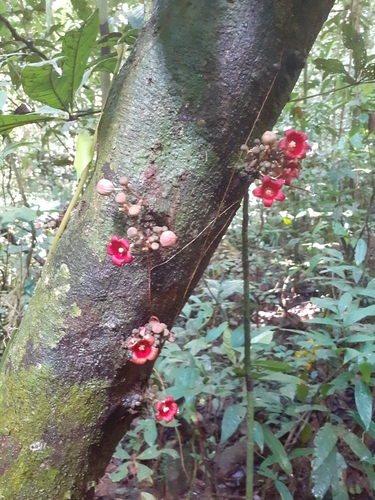
The tree produces flowers along the trunk and branches.
Other Uses
The heartwood is orange-brown; the sapwood is grey. The wood is rather hard and heavy. The stems are used for native house construction and as pestles.
Production
In Liberia the nuts are produced from November to December.
Notes
Also put in the family Sterculiaceae.
Names & Synonyms
Askonalebia, Gauo, Karlor, Klawa
References (5)
- Brink, M., 2007. Cola laurifolia Mast. [Internet] Record from Protabase. Louppe, D., Oteng-Amoako, A.A. & Brink, M. (Editors). PROTA (Plant Resources of Tropical Africa), Wageningen, Netherlands. < http://database.prota.org/search.htm>. Accessed 15 October 2009.
- Burkill, H. M., 1985, The useful plants of west tropical Africa, Vol. 4. Kew.
- liberianfaunaflora.org Plant Atlas
- Manvell, A., 2011, Use of Non-Timber Forest Products around Sapo National Park, Liberia (Report B) p 16
- World Checklist of Useful Plant Species 2020. Royal Botanic Gardens, Kew