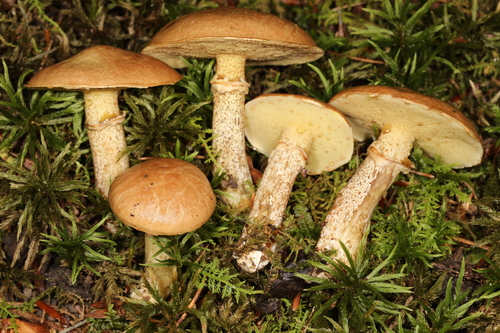
Suillus collinitus
(Fries) Kuntze
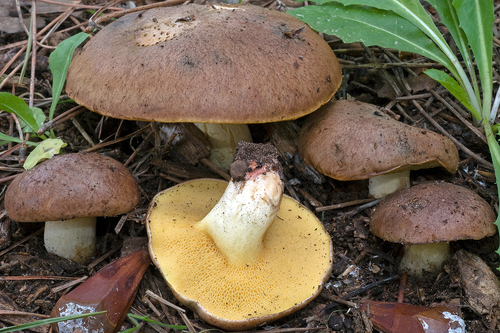
(c) Federico Calledda, some rights reserved (CC BY-NC), uploaded by Federico Calledda
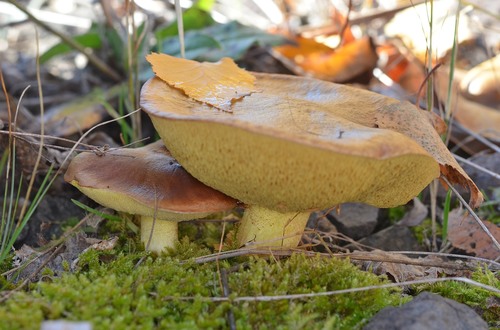
(c) Cordula Bernert, some rights reserved (CC BY-NC), uploaded by Cordula Bernert
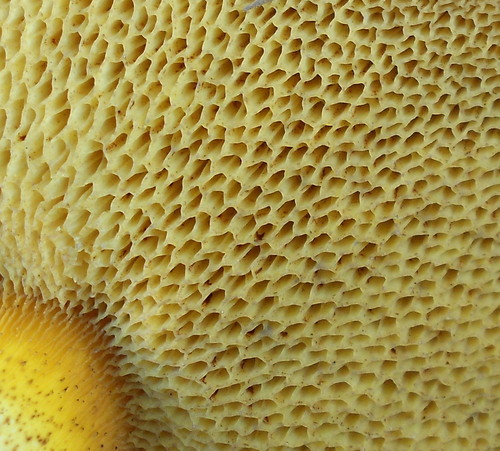
(c) Danilo Ugrnov, some rights reserved (CC BY-NC), uploaded by Danilo Ugrnov
What to Eat
Edible parts: Mushroom, Fungus
Where to Find It
It is a Mediterranean climate plant.
Europe, Italy, Mediterranean, Portugal, Sicily, Turkey, Türkiye,
How to Identify
A mushroom in the family Suillaceae found in Mediterranean climate regions.
Wikipedia
Source ↗Suillus collinitus is a pored mushroom of the genus Suillus in the family Suillaceae. It is an edible mushroom found in European pine forests. The mushroom has a reddish to chestnut-brown cap that reaches up to 11 cm (4.3 in) in diameter, and a yellow stem measuring up to 7 cm (2.8 in) tall by 1 to 2 cm (0.4 to 0.8 in) thick. On the underside of the cap are small angular pores, initially bright yellow before turning greenish-brown with age. A characteristic feature that helps to distinguish it from similar Suillus species, such as S. granulatus, is the pinkish mycelia at the base of the stem. Molecular analysis has shown the species to be related to other typical Mediterranean Suillus species such as S. bellinii, S. luteus, and S. mediterraneensis. S. collinitus is a mycorrhizal species, and forms associations with several species of pine, most notably the Aleppo pine. This tree species is commonly used in reforestation schemes and soil conservation against erosion in the Mediterranean region, and S. collinitus is often used as a beneficial inoculant to help the young trees better survive in typically harsh soil conditions.
Notes
Also put in the family Boletaceae.
Names & Synonyms
References (5)
- Akata, I., et al, 2012, Chemical Composition and Antioxidant Activities of 16 Wild Edible Mushroom Species Grown in Anatolia. International Journal of Pharmacology 8(2): 134-138
- Cocchi, L. et al, 2006, Heavy metals in edible mushrooms in Italy. Food Chemistry 98: 277-284
- Lentini, F. and Venza, F., 2007, Wild food plants of popular use in Sicily. J Ethnobiol Ethnomedicine. 3: 15
- Pace, G., 1998, Mushrooms of the world. Firefly books. p 192 (As Boletus collinitus)
- www.plantnames.unimelb.edu.au