Wallichia caryotoides
Roxb.
Himalayan dwarf fishtail palm
ArecaceaeShoots
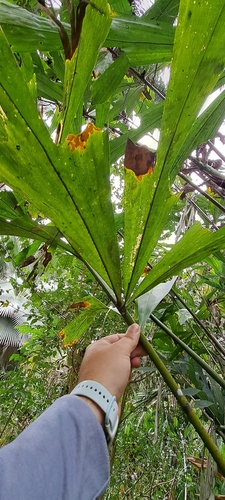
iNaturalist · cc-by-nc
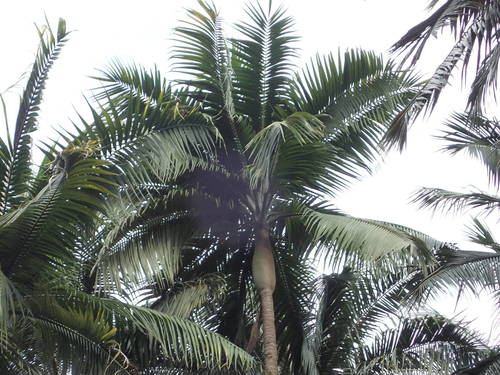
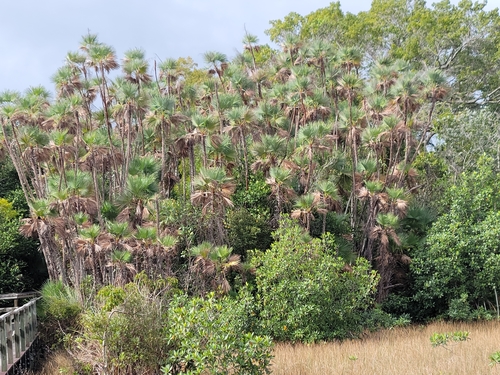
(c) Marcio Santos Ferreira, some rights reserved (CC BY-NC), uploaded by Marcio Santos Ferreira
(c) Marcio Santos Ferreira, some rights reserved (CC BY-NC), uploaded by Marcio Santos Ferreira

iNaturalist · cc-by-nc
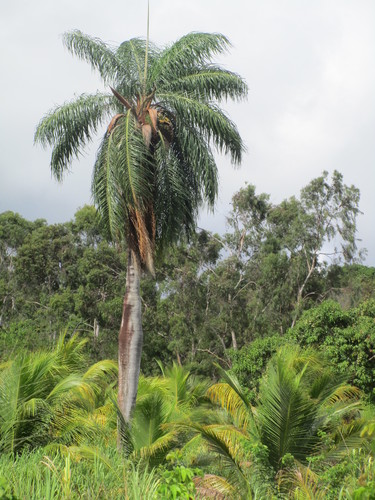
(c) James Bailey, some rights reserved (CC BY-NC)
(c) James Bailey, some rights reserved (CC BY-NC)

gbif · cc0
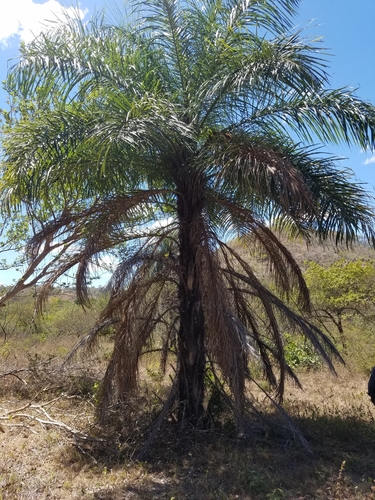
President and Fellows of Harvard College
President and Fellows of Harvard College
What to Eat
Edible parts: Shoots, Cabbage, Palm heart
The tender shoots, heart (palm cabbage), and palm heart are harvested for eating.
Where to Find It
It is a tropical plant. It grows in lowland rain forests in rocky places in steep slopes below 1,800 m above sea level. In Yunnan.
Asia, Australia, Bangladesh, China, India, Indochina, Myanmar, SE Asia, Thailand,
Countries: United Arab Emirates, Afghanistan, Armenia, Australia, Azerbaijan, Bangladesh, Bahrain, Brunei, Bhutan, China, Georgia, Indonesia, Israel, India, Iraq, Iran, Jordan, Japan, Kyrgyzstan, Cambodia, North Korea, South Korea, Kuwait, Kazakhstan, Laos, Lebanon, Sri Lanka, Myanmar, Mongolia, Maldives, Malaysia, Nepal, Oman, Philippines, Pakistan, Qatar, Saudi Arabia, Singapore, Syria, Thailand, Tajikistan, Timor-Leste, Turkmenistan, Turkey, Taiwan, Uzbekistan, Vietnam, Yemen
How to Identify
A palm. The stems are in clusters. They grow 3 m tall and are 2-10 cm across. The leaves are arranged in spirals. The leafy stalk is 0.9-1.5 m long. There are 8-12 leaflets on each side. They are sword shaped with 2 lobes. The middle leaflets are 25-49 cm long by 5-11 cm wide.
Names & Synonyms
Keujhay, Saingpo, Zanaung
References (2)
- Anderson, E. F., 1993, Plants and people of the Golden Triangle. Dioscorides Press. p 224
- Johnson, N., 2002, Environmental Change in northern Thailand: Impact on Wild Edible Plant Availability. Ecology of Food and Nutrition, 41: 5, 373-399