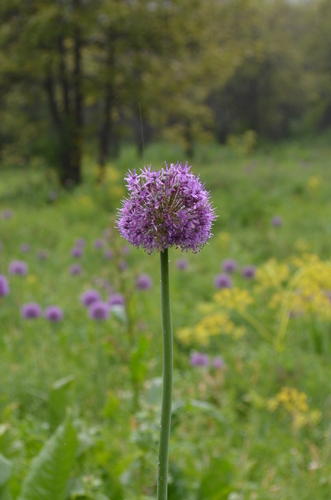
Allium oreoprasum
Schrenk
Lungho
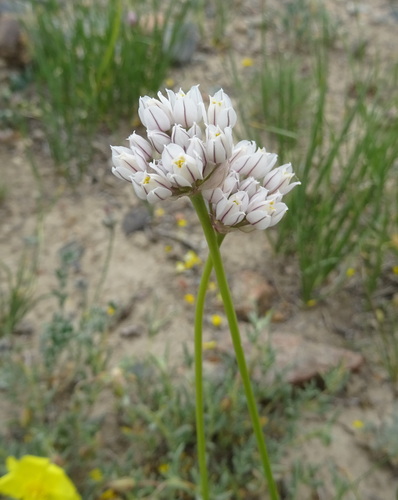
(c) Philippe RABAUTE, some rights reserved (CC BY-NC), uploaded by Philippe RABAUTE
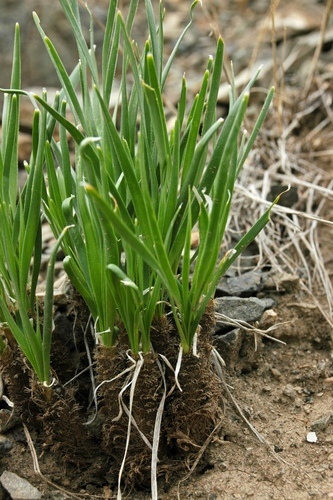
(c) vladimir_epiktetov, some rights reserved (CC BY-NC), uploaded by vladimir_epiktetov
What to Eat
Edible parts: Leaves, Bulb
The leaves and bulbs are eaten.
Where to Find It
It is a temperate plant. It grows on sunny slopes and stony shores of rivers between 1,200-2,700 m above sea level in western China.
Afghanistan, Asia, Central Asia, China, Himalayas, India, Kazakhstan, Kyrgyzstan, Nepal, Pakistan, Tajikistan, Tibet, Uzbekistan,
How to Identify
An onion plant. It has a cluster of bulbs. They are narrowly oval and 1 cm across. The leaves are narrow. They are 1-3 mm wide. The flowers are white with purple mid-veins.
Wikipedia
Source ↗Allium oreoprasum is a species of wild onion native to Central Asia. It has been found in Xinjiang, Tibet, Afghanistan, Kazakhstan, Kyrgyzstan, Pakistan, Tajikistan, Uzbekistan It grows at elevations of 1200–2700 m. Allium oreoprasum produces clumps of narrow bulbs up to 10 mm in diameter. Scape is up to 40 cm tall. Umbel has only a few flowers. Tepals are white or pale red with a dark purple midvein.
Notes
They have also been put in the family Alliaceae.
Names & Synonyms
Jimbu
References (3)
- Bhattarai, S and Chaudary, R. P., 2009, Wild Edible Plants Used by the People of Manang District, Central Nepal. Ecology of Food and Nutrition, 48:1-20
- Gautam, R. S., et al, 2022, Ethnobotanical Review of Wild Edible Plants of Nepal. Journal of Natural History Museum Volume 32, 2021-22 p 101
- Ghimire, S. K., et al, 2008, Non-Timber Forest Products of Nepal Himalaya. WWF Nepal p 20