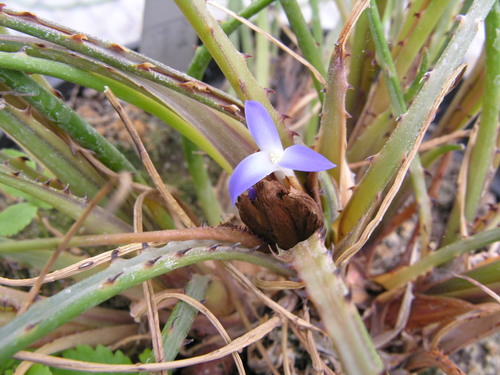
Bromelia hieronymi
Mez
Kisye, Isa

(c) Martin Lowry, some rights reserved (CC BY-NC), uploaded by Martin Lowry
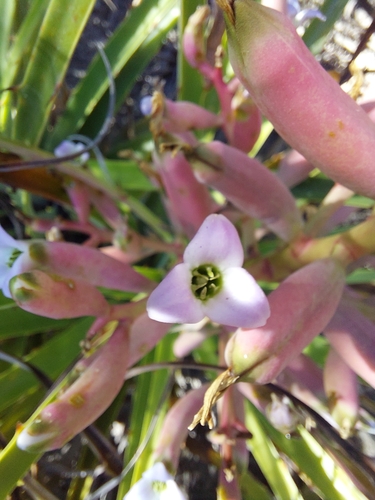
(c) Leandro Bareiro Guiñazú, some rights reserved (CC BY-NC), uploaded by Leandro Bareiro Guiñazú
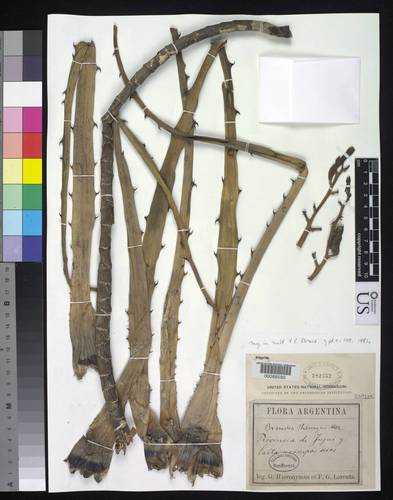
(c) Smithsonian Institution, National Museum of Natural History, Department of Botany, some rights reserved (CC BY-NC-SA)
What to Eat
Edible parts: Bud, Stolons, Stem tips
The very young stem buds and young peeled stolons are eaten with fish fats. The heart of the plant is roasted on the fire.
Where to Find It
It is a subtropical plant. In Argentina it grows between 400-700 m above sea level. It is usually in seasonally dry forests.
Argentina, Bolivia, Paraguay, South America,
How to Identify
A pineapple like herb. It has stolons. The leaves are in a ring. The fruit form fleshy berries.
Wikipedia
Source ↗Bromelia hieronymi is a species of plant in the family Bromeliaceae native to Argentina, Bolivia and Paraguay. It is one of several plants used by the Wichí people as a fiber for weaving called chaguar. It has anti-inflammatory agents that are secreted by the fruit.
Names & Synonyms
Caraguata, Chaguar, Chitsaj, Dajua, Garabata, Kawatami, Nankankwe
References (5)
- Arenas, P. and Scarpa, G. F., 2006, Edible wild plants of the Chorote Indians, Gran Chaco, Argentina. Botanical Journal of the Linnean Society. Vol. 153 (1): pp 73-85
- Kermath, B. M., et al, 2014, Food Plants in the Americas: A survey of the domesticated, cultivated and wild plants used for Human food in North, Central and South America and the Caribbean. On line draft. p 145
- Montani, M. C. & Scarpa, G. F., 2016, Recursos vegetales y prácticas alimentarias entre indígenas tapiete del noreste de la provincia de Salta, Argentina. Darwiniana, nueva serie vol.4 no.1 San Isidro jul. 2016
- Polini, G., et al, Useful and edible plants of Paraguay Region of Chaco. p 26
- Scarpa, G. F., 2009, Wild food plants used by the indigenous peoples of South American Gran Chaco: A general synopsis and intercultural comparison. Journal of Applied Botany and Food Quality 83:90-101