Artabotrys monteiroae
Oliv.
Hook-berry bush, Red hook-berry

(c) magdastlucia, some rights reserved (CC BY-NC), uploaded by magdastlucia
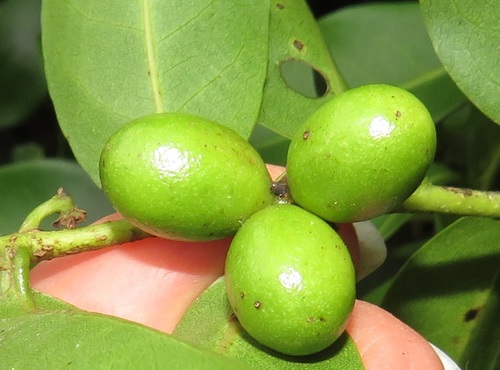
(c) magdastlucia, some rights reserved (CC BY-NC), uploaded by magdastlucia
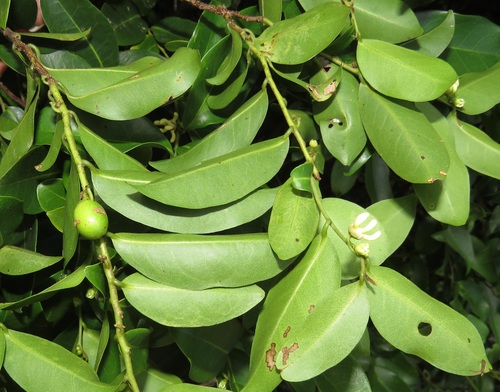
(c) magdastlucia, some rights reserved (CC BY-NC), uploaded by magdastlucia
What to Eat
Edible parts: Fruit
The fruit are eaten as a snack.
Where to Find It
It is a tropical plant. It is mostly in mid altitudes and mountain regions. It grows in rainforest. It suits humid locations. In Malawi it grows between 600-2,200 m altitude.
Africa, Angola, Central Africa, Congo, East Africa, Eswatini, Ethiopia, Malawi, Mozambique, South Africa, Southern Africa, Swaziland, Tanzania, Uganda, Zambia, Zimbabwe,
How to Identify
A large creeper or a tree. It can grow 6 m tall. It has hooked woody tendrils. The branches are reddish-brown. The leaves are 3-14 cm long by 2-6 cm wide. They are oval and wedge shaped at the base. There are 1-9 flowers are short stalks. The petals are yellow. The fruit carpels are 1-1.5 cm long by 0.8 cm wide. They have 2 seeds.
Names & Synonyms
Munnamutswu, Rooihaakbessie, Umazwenda
References (7)
- Flora Zambesiaca. http://apps.kew.org/efloras
- Fowler, D. G., 2007, Zambian Plants: Their Vernacular Names and Uses. Kew. p 8
- Long, C., 2005, Swaziland's Flora - siSwati names and Uses http://www.sntc.org.sz/flora/
- Magwede, K., van Wyk, B.-E., & van Wyk, A. E., 2019, An inventory of Vhavenḓa useful plants. South African Journal of Botany 122 (2019) 57–89
- Ruiters-Welcome, A. K., 2019, Food plants of southern Africa. Ph.D. thesis. Univ. of Johannesburg p 18
- Welcome, A. K. & Van Wyk, B.-E., 2019, An inventory and analysis of the food plants of southern Africa. South African Journal of Botany 122 (2019) 136–179
- White, F., Dowsett-Lemaire, F. and Chapman, J. D., 2001, Evergreen Forest Flora of Malawi. Kew. p 127


