Corchorus schimperi
Cufod.
Horn-fruited jute

(c) robburrett, some rights reserved (CC BY-NC)
no rights reserved
no rights reserved
What to Eat
Edible parts: Leaves
The leaves are cooked and eaten as a green vegetable.
Where to Find It
It is a subtropical plant. It grows in sands and clays and grows between 1,310-1,950 m above sea level. It can grow in arid places.
Africa, Botswana, East Africa, Eswatini, Ethiopia, Kenya, Malawi, Namibia, South Africa, Southern Africa, Swaziland, Tanzania, Zambia, Zimbabwe,
How to Identify
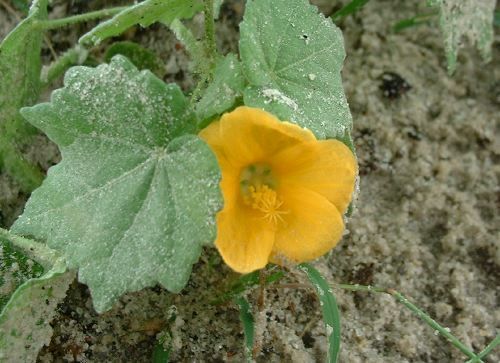
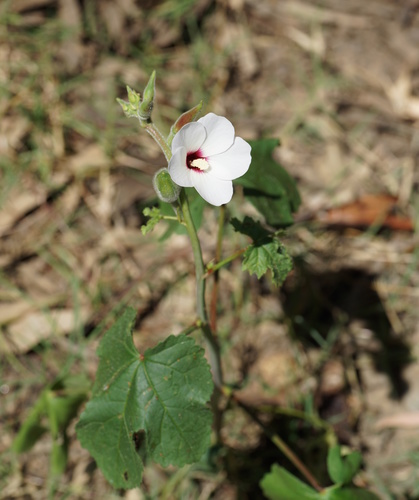
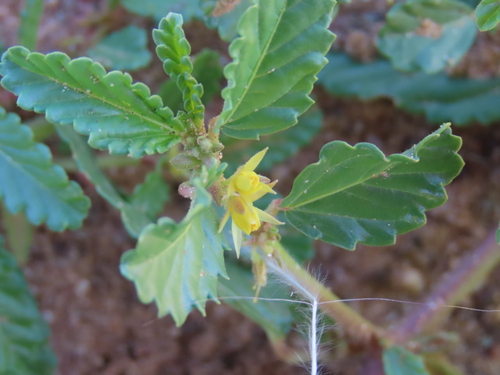
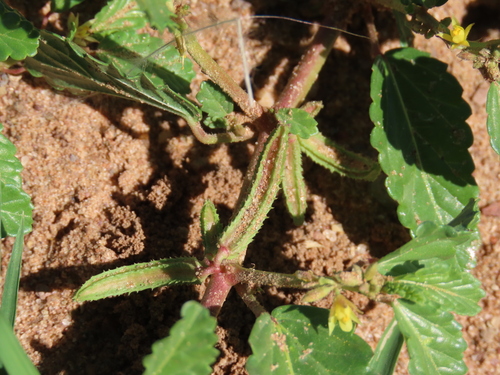
A herb. It lies along the ground. It is an annual plant. The branches have a line of curled hairs along one side. The leaves are oblong to sword shaped. They are 5 cm long by 1.5 cm wide. There are a few hairs on the edges. There are rounded teeth along the edge. The flowers are in clusters of 1-3 in the axils of the leaves. The fruit is a 3 angled capsule. It can be 2.5 cm long.
Notes
These have also been in the Tiliaceae.
Names & Synonyms
Murere-luhya
References (3)
- Long, C., 2005, Swaziland's Flora - siSwati names and Uses http://www.sntc.org.sz/flora/
- Royal Botanic Gardens, Kew (1999). Survey of Economic Plants for Arid and Semi-Arid Lands (SEPASAL) database. Published on the Internet; http://www.rbgkew.org.uk/ceb/sepasal/internet [Accessed 11th June 2011]
- World Checklist of Useful Plant Species 2020. Royal Botanic Gardens, Kew