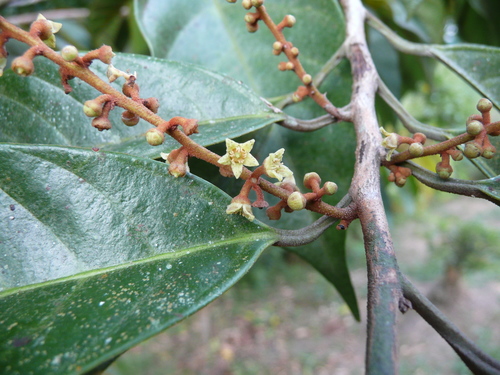
Aptandra zenkeri
Engl.
OlacaceaeSeeds/Nuts

iNaturalist · cc-by-nc
(c) Gwili Gibbon, some rights reserved (CC BY-NC), uploaded by Gwili Gibbon
(c) Gwili Gibbon, some rights reserved (CC BY-NC), uploaded by Gwili Gibbon

iNaturalist · cc-by-nc
(c) Gwili Gibbon, some rights reserved (CC BY-NC)
(c) Gwili Gibbon, some rights reserved (CC BY-NC)
What to Eat
Edible parts: Seeds
The seeds are eaten.
Where to Find It
It is a tropical plant. It grows in undergrowth in primary forest in West Africa. It can grow in seasonally flooded forest.
Africa, Angola, Central Africa, Central African Republic, CAR, Congo DR, Congo R, Côte d'Ivoire, Gabon, Ghana, Ivory Coast, Nigeria, West Africa,
Countries: Angola, Burkina Faso, Burundi, Benin, Botswana, Congo (DRC), Central African Republic, Congo (Republic), Cote d'Ivoire, Cameroon, Cape Verde, Djibouti, Algeria, Egypt, Eritrea, Ethiopia, Gabon, Ghana, Gambia, Guinea, Equatorial Guinea, Guinea-Bissau, Kenya, Comoros, Liberia, Lesotho, Libya, Morocco, Madagascar, Mali, Mauritania, Mauritius, Malawi, Mozambique, Namibia, Niger, Nigeria, Rwanda, Seychelles, Sudan, Sierra Leone, Senegal, Somalia, South Sudan, Sao Tome & Principe, Eswatini, Chad, Togo, Tunisia, Tanzania, Uganda, South Africa, Zambia, Zimbabwe
How to Identify
A shrub or small tree. It grows 8-13 m high. The trunk is 10 cm across. The leaves are alternate along the stalk and the upper surface is dark green and shiny. The lower surface is dull pale green. The flowers are small. The fruit has a pink waxy fleshy layer around it.
References (1)
- Burkill, H. M., 1985, The useful plants of west tropical Africa, Vol. 4. Kew.