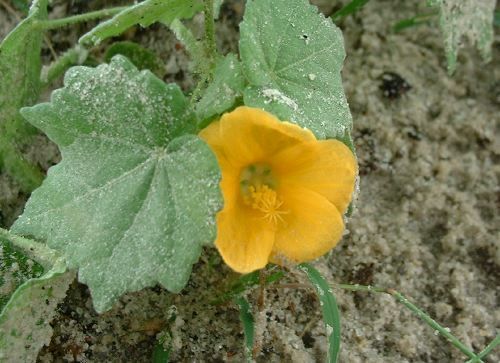
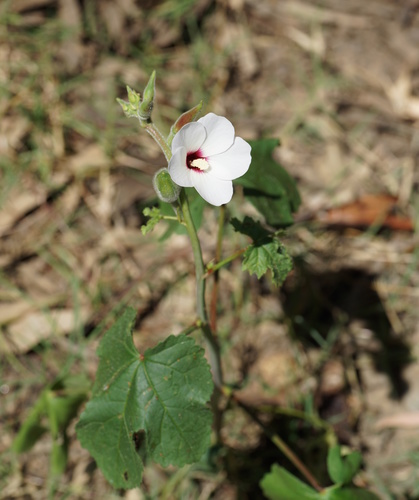
Hibiscus noldeae
Baker f.
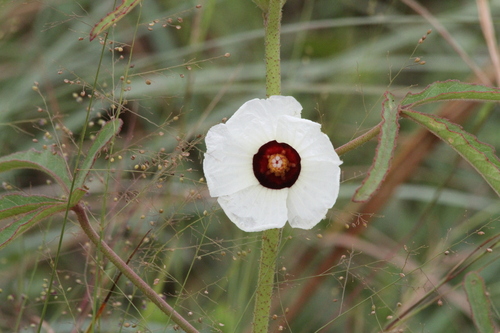
(c) Maël Dewynter, some rights reserved (CC BY-NC), uploaded by Maël Dewynter
What to Eat
Edible parts: Leaves, Vegetable
The leaves are eaten as a vegetable.
Where to Find It
It is a tropical plant.
Africa, Angola, Cameroon, Central Africa, Congo, East Africa, Gabon, Nigeria, Uganda, Tanzania, West Africa,
How to Identify
A tropical shrub in the Malvaceae family with perennial growth. Native to tropical regions, it maintains its structure year after year.
How to Grow
Propagation: Seed - sow in situ or in containers. Germination is usually fairly rapid and no special pretreatment is needed, although germination will be faster if the seed is abraded or soaked prior to sowing. Prick out container-grown seedlings into individual pots when they are large enough to handle and plant them out into their permanent positions when they are 10cm or more tall. Cuttings of half-ripe wood in a frame. They generally strike readily, particularly if cuttings are taken on an angle through a node and rooting hormone is applied to their ends. Division of the rootstock.
Other Uses
A fibre obtained from the inner bark is used to make cordage.
References (3)
- Burkill, H. M., 1985, The useful plants of west tropical Africa, Vol. 4. Kew.
- Grubben, G. J. H. and Denton, O. A. (eds), 2004, Plant Resources of Tropical Africa 2. Vegetables. PROTA, Wageningen, Netherlands. p 313
- World Checklist of Useful Plant Species 2020. Royal Botanic Gardens, Kew