Raphia africana
Otedoh
ArecaceaeBark/Sap

gbif · cc-by
Royal Botanic Gardens, Kew
Royal Botanic Gardens, Kew

gbif · cc-by
Royal Botanic Gardens, Kew
Royal Botanic Gardens, Kew

gbif · cc-by
Royal Botanic Gardens, Kew
Royal Botanic Gardens, Kew
What to Eat
Edible parts: Sap
The sap from the stem is fermented to make an alcoholic drink.
Where to Find It
It is a tropical plant. It grows in dense rain-forest in West Africa. It will grow in swamps and on dry land.
Africa, Cameroon, Central Africa, Nigeria, West Africa,
Countries: Angola, Burkina Faso, Burundi, Benin, Botswana, Congo (DRC), Central African Republic, Congo (Republic), Cote d'Ivoire, Cameroon, Cape Verde, Djibouti, Algeria, Egypt, Eritrea, Ethiopia, Gabon, Ghana, Gambia, Guinea, Equatorial Guinea, Guinea-Bissau, Kenya, Comoros, Liberia, Lesotho, Libya, Morocco, Madagascar, Mali, Mauritania, Mauritius, Malawi, Mozambique, Namibia, Niger, Nigeria, Rwanda, Seychelles, Sudan, Sierra Leone, Senegal, Somalia, South Sudan, Sao Tome & Principe, Eswatini, Chad, Togo, Tunisia, Tanzania, Uganda, South Africa, Zambia, Zimbabwe
How to Identify
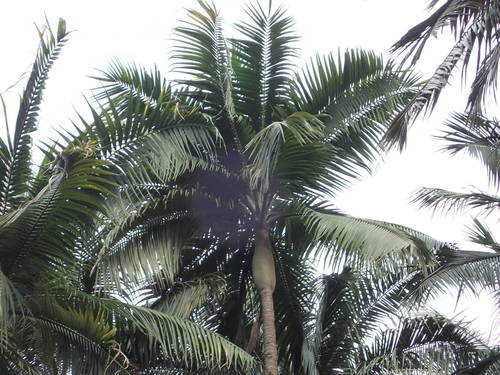
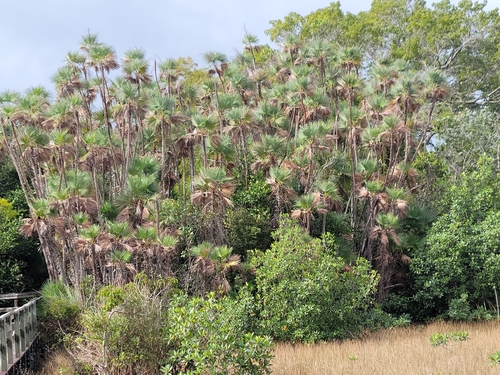
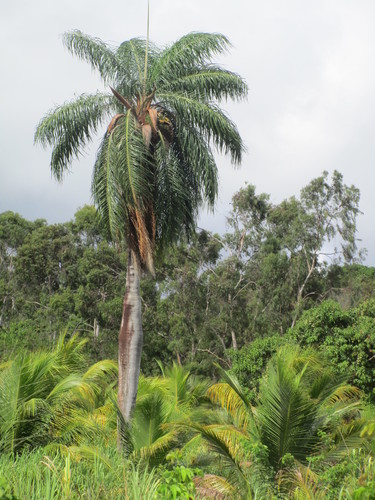
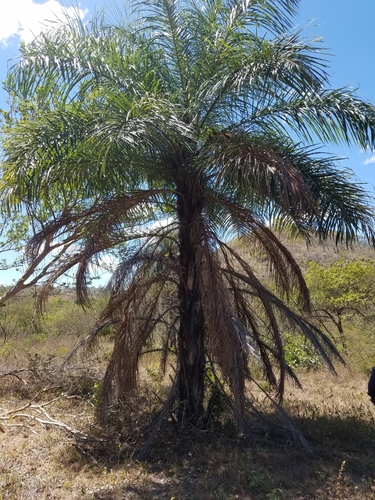
A palm. The trunk is 5-10 m tall. It usually has 2-4 stems. They branch from the base.
How to Grow
Succeeds in swamps and on dry land. A monocarpic plant - growing for several years without flowering, then producing a massive inflorescence and dying after setting seed.
Other Uses
The leaves have a wide range of uses - the leaflets being used for thatching and weaving whilst the midribs are used for construction, paddles, making furniture etc.
References (1)
- Burkill, H. M., 1985, The useful plants of west tropical Africa, Vol. 4. Kew.