Sclerosperma mannii
Wendl.
ArecaceaeSeeds/Nuts
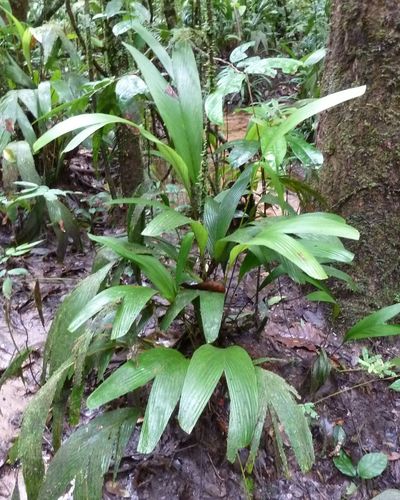
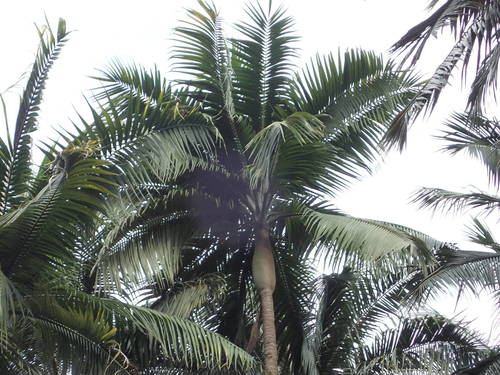
iNaturalist · cc-by-nc
(c) Carel Jongkind, some rights reserved (CC BY-NC), uploaded by Carel Jongkind
(c) Carel Jongkind, some rights reserved (CC BY-NC), uploaded by Carel Jongkind

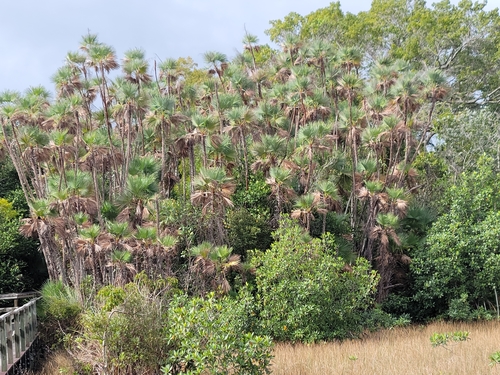
iNaturalist · cc-by-nc
(c) Nick Helme, some rights reserved (CC BY-NC)
(c) Nick Helme, some rights reserved (CC BY-NC)

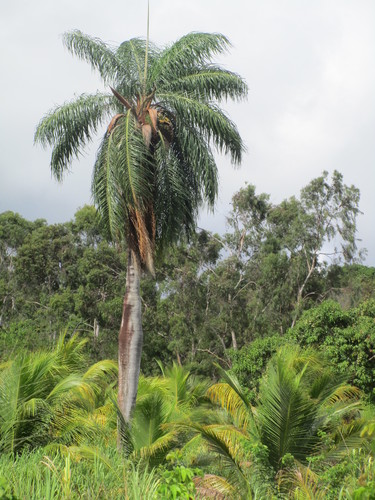
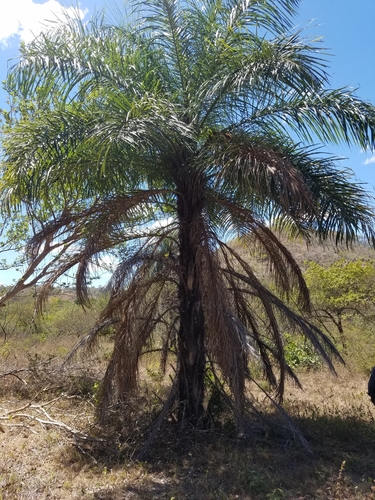
iNaturalist · cc-by-nc
(c) Carel Jongkind, some rights reserved (CC BY-NC)
(c) Carel Jongkind, some rights reserved (CC BY-NC)
What to Eat
Edible parts: Seeds
The young fruit can be eaten after removing the outer coat, and the seeds are edible.
Where to Find It
It is a tropical plant. It grows along river swamps in areas of high rainfall in West Africa.
Africa, Angola, Cameroon, Central Africa, Congo DR, Gabon, Ghana, West Africa,
Countries: Angola, Burkina Faso, Burundi, Benin, Botswana, Congo (DRC), Central African Republic, Congo (Republic), Cote d'Ivoire, Cameroon, Cape Verde, Djibouti, Algeria, Egypt, Eritrea, Ethiopia, Gabon, Ghana, Gambia, Guinea, Equatorial Guinea, Guinea-Bissau, Kenya, Comoros, Liberia, Lesotho, Libya, Morocco, Madagascar, Mali, Mauritania, Mauritius, Malawi, Mozambique, Namibia, Niger, Nigeria, Rwanda, Seychelles, Sudan, Sierra Leone, Senegal, Somalia, South Sudan, Sao Tome & Principe, Eswatini, Chad, Togo, Tunisia, Tanzania, Uganda, South Africa, Zambia, Zimbabwe
How to Identify
A palm. It almost has no stem. It develops suckers and forms clusters. The leaves are rigid and arch over. They are about 5 m long.
How to Grow
It can be grown from suckers.
Names & Synonyms
Bondo, Gangu, Mangangu, Mangobo, Marnia, Mbya
References (5)
- Burkill, H. M., 1985, The useful plants of west tropical Africa, Vol. 4. Kew.
- Latham, P., 2004, Useful Plants of Bas-Congo province. Salvation Army & DFID p 247
- Lautenschläger, T., et al, 2018, First large-scale ethnobotanical survey in the province of Uíge, northern Angola. Journal of Ethnobiology and Ethnomedicine (2018) 14:51
- Terashima, H., et al, 1992, Ethnobotany of the Lega in the Tropical Rainforest of Eastern Zaire (Congo): Part Two, Zone de Walikale, African Study Monographs, Suppl. 19:1-60
- World Checklist of Useful Plant Species 2020. Royal Botanic Gardens, Kew