Xylopia staudtii
Engl. & Diels
Guinea pepper tree
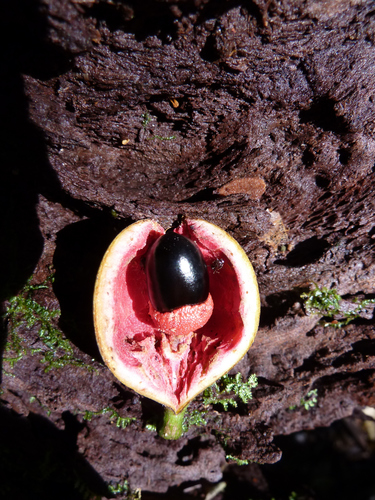
(c) Carel Jongkind, some rights reserved (CC BY-NC), uploaded by Carel Jongkind
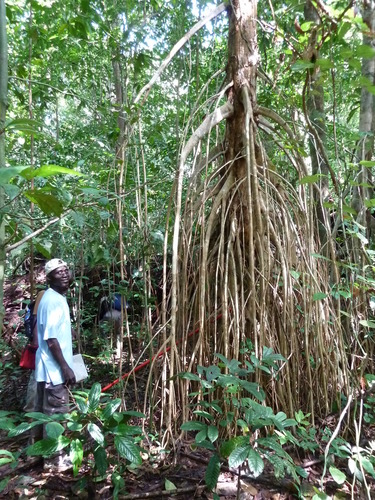
(c) Carel Jongkind, some rights reserved (CC BY-NC), uploaded by Carel Jongkind
What to Eat
Edible parts: Fruit - flavouring, Seeds - spice
The fruit is used as a flavouring and the seeds are used as a spice.
Where to Find It
It is a tropical plant. It grows in evergreen forest. It prefers moist valleys. It is occasionally in freshwater swamp. It grows from sea level to 1,350 m above sea level.
Africa, Angola, Cameroon, Central Africa, Congo DR, Congo R, Côte d'Ivoire, Equatorial Guinea, Gabon, Ghana, Ivory Coast, Liberia, Nigeria, Sao Tome and Principe, Sierra Leone, Uganda, West Africa,
How to Identify
A tree. It grows 30 m high. It can be 50 m tall. The trunk is straight and slender. There are buttresses at the base. The trunk can be 80 cm across. The leaves are narrowly oval and curl around the leaf stalk at the base. They are 7-10 cm long by 3-5 cm wide. They are lighter green underneath. The flowers occur singly and have yellow petals. The fruit are about 5 cm long. They are black and have 2-4 seeds.
Medicinal Uses
Locals use stem bark extracts to treat dysentery in Cameroun and cold in Côte d'Ivoire.
Wikipedia
Source ↗Xylopia staudtii Engl & Diels is a tall tree within the Annonaceae family, it can grow up to 50 metres (160 ft) tall, the tallest height of the African Xylopia trees. It occurs in forest and freshwater swamps in West Africa.
Names & Synonyms
Drehn, Duanan, Efomu, Fofois, Fonde, Fonfi, Gbajinea, Niumbi, Nkala, Ntom, Odjobi, Takon-blu-chu, Yengetomei
References (4)
- Burkill, H. M., 1985, The useful plants of west tropical Africa, Vol. 1. Kew.
- FAO Corporate Document Repository. The Major Significance of 'Minor' Forest Products. Appendix 3
- Savill, P. S. & Fox, J. E. D., Trees of Sierra Leone. p 44
- World Checklist of Useful Plant Species 2020. Royal Botanic Gardens, Kew


