Corchorus urticifolius
Wight. & Arn.
MalvaceaeLeaves
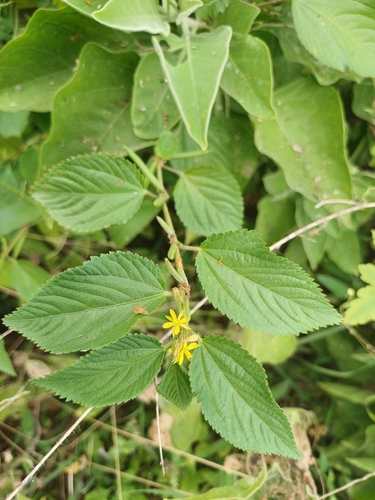
iNaturalist · cc-by
(c) Hopeland, some rights reserved (CC BY), uploaded by Hopeland
(c) Hopeland, some rights reserved (CC BY), uploaded by Hopeland
What to Eat
Edible parts: Leaves
The leaves are used as a green vegetable.
Where to Find It
It grows in sandy loams. It can grow in arid places.
Africa, Asia, East Africa, Ethiopia, India, Kenya, Myanmar, SE Asia, Somalia, Tanzania,
Countries: United Arab Emirates, Afghanistan, Armenia, Angola, Azerbaijan, Bangladesh, Burkina Faso, Bahrain, Burundi, Benin, Brunei, Bhutan, Botswana, Congo (DRC), Central African Republic, Congo (Republic), Cote d'Ivoire, Cameroon, China, Cape Verde, Djibouti, Algeria, Egypt, Eritrea, Ethiopia, Gabon, Georgia, Ghana, Gambia, Guinea, Equatorial Guinea, Guinea-Bissau, Indonesia, Israel, India, Iraq, Iran, Jordan, Japan, Kenya, Kyrgyzstan, Cambodia, Comoros, North Korea, South Korea, Kuwait, Kazakhstan, Laos, Lebanon, Sri Lanka, Liberia, Lesotho, Libya, Morocco, Madagascar, Mali, Myanmar, Mongolia, Mauritania, Mauritius, Maldives, Malawi, Malaysia, Mozambique, Namibia, Niger, Nigeria, Nepal, Oman, Philippines, Pakistan, Qatar, Rwanda, Saudi Arabia, Seychelles, Sudan, Singapore, Sierra Leone, Senegal, Somalia, South Sudan, Sao Tome & Principe, Syria, Eswatini, Chad, Togo, Thailand, Tajikistan, Timor-Leste, Turkmenistan, Tunisia, Turkey, Taiwan, Tanzania, Uganda, Uzbekistan, Vietnam, Yemen, South Africa, Zambia, Zimbabwe
How to Identify
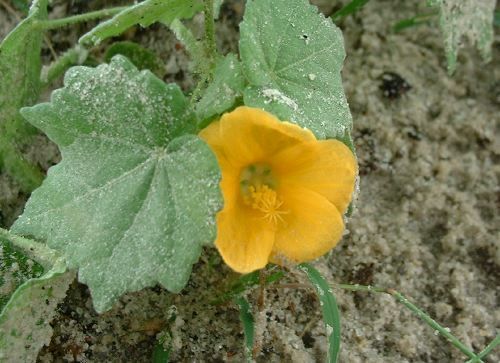
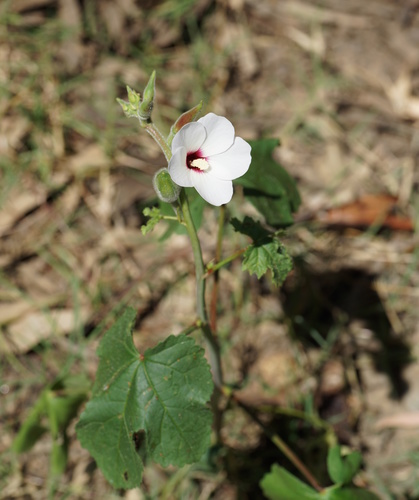
A herb. It lies along the ground. It is an annual plant and grows 1 m tall and 25 cm wide. The leaves are alternate and narrowly oval. There are teeth along the edge. The leaves are 5-8 cm long by 2-5 cm wide. The flowers are in groups of 2-4. They are opposite the leaves. The petals are yellow. The fruit is a 3 sided capsule. There are 3 seeds.
Names & Synonyms
Chepkarkarian, Mlenda, Sagar
Corchorus quinquenervis Hochst. ex A. Rich.Corchorus subscandens Wall. [Invalid]
References (2)
- Royal Botanic Gardens, Kew (1999). Survey of Economic Plants for Arid and Semi-Arid Lands (SEPASAL) database. Published on the Internet; http://www.rbgkew.org.uk/ceb/sepasal/internet [Accessed 11th June 2011]
- World Checklist of Useful Plant Species 2020. Royal Botanic Gardens, Kew