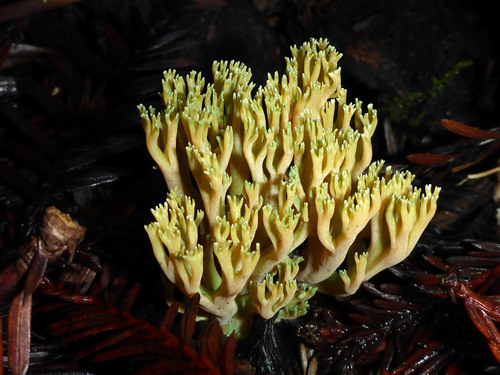
Ramaria stricta
(Pers.: Fr.) Quel.
Upright coral fungus
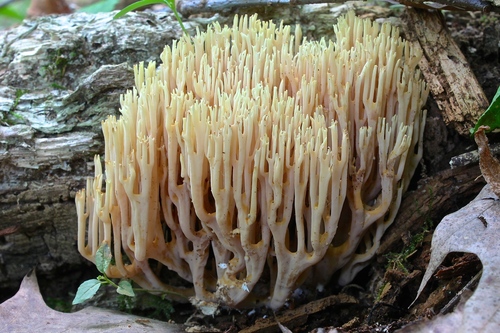
(c) Fluff Berger, some rights reserved (CC BY-SA), uploaded by Fluff Berger

(c) Harry Harms, some rights reserved (CC BY-NC-SA)
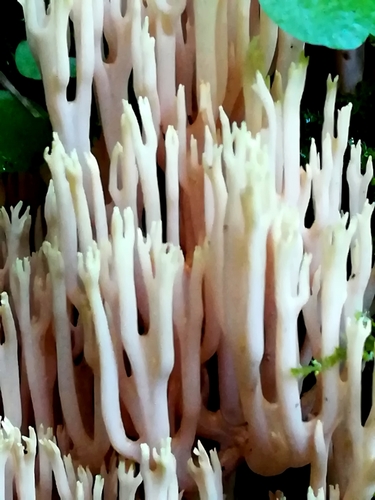
(c) jfb22, some rights reserved (CC BY-NC), uploaded by jfb22
What to Eat
Edible parts: Mushroom, Fungus
The mushroom/fungus is edible.
Where to Find It
It is a temperate plant.
Asia, China, Europe, India, Japan, Mexico, Nepal, North America, Philippines, SE Asia,
How to Identify
A temperate-zone coral fungus in the Ramariaceae family, sold in local markets.
Wikipedia
Source ↗Ramaria stricta, commonly known as the strict-branch coral or strict coral mushroom, is a coral fungus of the genus Ramaria. Its fruit body is up to 10 cm (4 in) tall, made of multiple slender, compact, and vertical parallel branches. Its color is typically light tan to vinaceous-brown. All parts of the mushroom bruise when handled. There are several lookalikes that can usually be distinguished from R. stricta by differences in coloration, bruising reaction, or microscopic features. The species has a cosmopolitan distribution and grows on dead wood, stumps, trunks, and branches of both deciduous and coniferous trees. The fungus is inedible due to its unpleasant odor and bitter taste.
Other Information
It is sold in local markets.
Names & Synonyms
References (6)
- Ambasta, S.P. (Ed.), 2000, The Useful Plants of India. CSIR India. p 131 (As Clavaria stricta)
- Boa, E. R., 2004, Wild edible fungi and their importance to people. FAO Non Wood Forest Products Booklet 17
- Christensen, M., et al, 2008, Collection and Use of Wild Edible Fungi in Nepal. Economic Botany, 62(1), 2008, pp. 12–23
- Farfan B., et al, 2007, Mazahua Ethnobotany and Subsistence in the Monarch Butterfly Biosphere Reserve, Mexico. Economic Botany 61(2) pp 173-191
- Perez-Moreno, J., et al, 2009, Social and Biotechnological Studies of Wild Edible Mushrooms in Mexico. Acta Botanica Yunnanica Suppl. XV1: 55-61
- www.plantnames.unimelb.edu.au