Carpentaria acuminata
(Wendl. & Drude) Becc.
Carpentaria palm

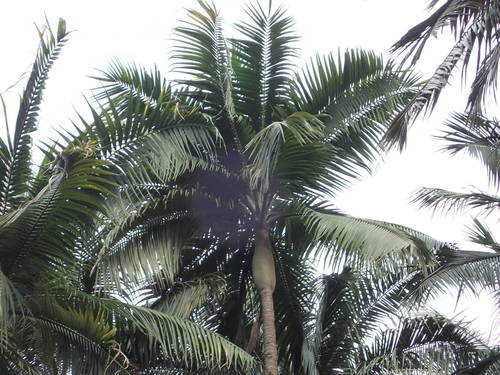
(c) Reuben C. J. Lim, some rights reserved (CC BY-NC-SA)
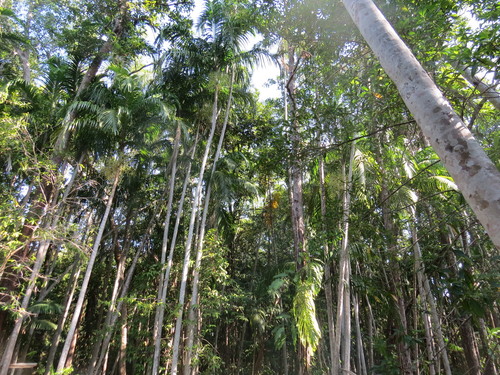
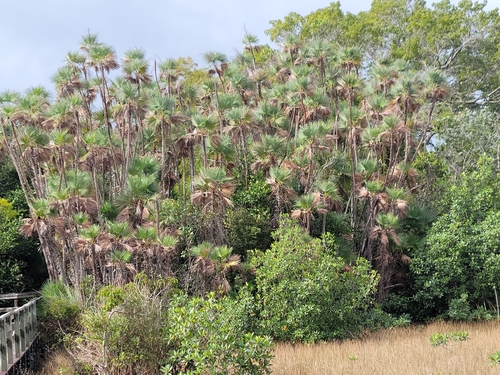
(c) Nina Lester Finley, some rights reserved (CC BY-NC), uploaded by Nina Lester Finley
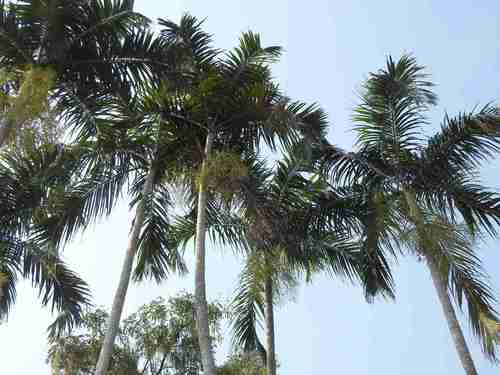
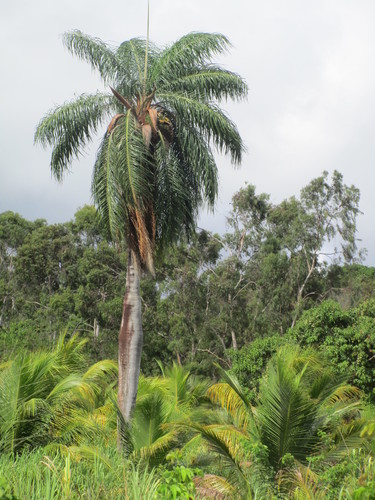
(c) Didier Levasseur, some rights reserved (CC BY-NC), uploaded by Didier Levasseur
What to Eat
Edible parts: Heart, Buds, Cabbage, Palm heart
The palm heart is edible, though harvesting it kills the palm and is not normally done.
Known Hazards
Where to Find It
It is a tropical plant. They need a temperature above 13-15°C. It will grow on most soils. It needs a protected, warm, sunny position. It is damaged by drought and frost. It needs regular moisture and humidity. Plants are often on creek banks and low sites which are occasionally flooded. The soil needs to be well-drained. In the Cairns Botanical Gardens. It suits hardiness zones 11-12.
Asia, Australia*, Indonesia, North America, SE Asia, USA,
How to Identify
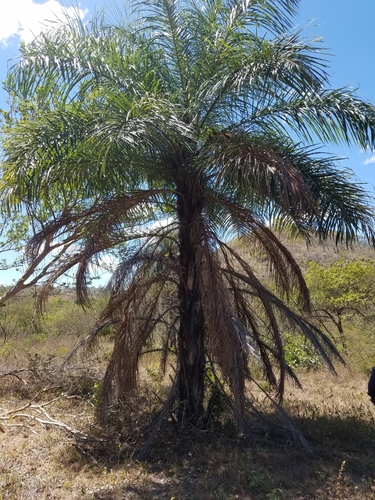
A medium sized palm. The trunk is smooth, slender and ringed with old leaf scars. Plants grow 10-30 m high and spreads 3-7 m across. The trunk is 15-30 cm thick. The leaf sheaths form a greyish-green crown-shaft 60-100 cm long. The palm has a small crown of arching fronds. Leaves are arching and dark green. They are feather-like and 2-4 m long. It has closely spaced strap like leaflets 20-60 cm long by 2-4 cm wide. The leaflets taper to a ragged end. The flowering stalks are 1.5 m long. The stalk is flattened. Several flowering stalks can occur at the same time. The flower stalks come from below the crown-shaft. The flowers are cup shaped and cream. They are about 1 cm across. Male and female flowers are produced on the same stalk. The fruit are yellow and red when ripe. They are oval with a pointed tip. They are 1-2 cm long by 15-18 mm wide. They have a thick, fleshy, juicy layer around one seed.
How to Grow
Plants are grown from fresh seed. Seed germinate in 2-4 months. Seedlings are not easy to transplant. They should be re-potted regularly.
Production
They grow quickly in hot, humid places.
Notes
The juice from ripe fruit can damage skin. There is only one Carpentaria species.
Names & Synonyms
Jora, Palem carpentaria, Thora, Yigora, Yirrgi yirrgi
References (25)
- Ann. Jard. Bot. Buitenzorg 2:128. 1885
- Blomberry, A. & Rodd, T., 1982, Palms. An informative practical guide. Angus & Robertson. p
- Bodkin, F., 1991, Encyclopedia Botanica. Cornstalk publishing, p 216
- Brickell, C. (Ed.), 1999, The Royal Horticultural Society A-Z Encyclopedia of Garden Plants. Convent Garden Books. p 231 (Photo) Brock, J., 1993, Native Plants of Northern Australia, Reed. p 115
- Checklist of NT Vascular Plant Species. January 2003.
- Cherikoff V. & Isaacs, J., The Bush Food Handbook. How to gather, grow, process and cook Australian Wild Foods. Ti Tree Press, Australia p 198
- Cronin, L., 1989, The Concise Australian Flora. Reed. p 206 (Picture)
- Cronin, L., 2000, Australian Palms, Ferns, Cycads and Pandans. Cronin Publications. p 18
- Cundall, P., (ed.), 2004, Gardening Australia: flora: the gardener's bible. ABC Books. p 332
- Elliot, W.R., & Jones, D.L., 1982, Encyclopedia of Australian Plants suitable for cultivation. Vol 2. Lothian. p 465
- Gibbons, M., 2003, A pocket guide to Palms. Chartwell Books. p 64
- Hearne, D.A., & Rance, S.J., 1975, Trees for Darwin and Northern Australia. AGPS, Canberra p 39, Pl 11
- Jones D, L, 1986, Ornamental Rainforest Plants in Australia, Reed Books, p 327
- Jones, D.L., 1994, Palms throughout the World. Smithtonian Institution, Washington. p 57, 161
- Jones, D.L., 2000, Palms of Australia 3rd edition. Reed/New Holland. p 82
- Lazarides, M. & Hince, B., 1993, Handbook of Economic Plants of Australia, CSIRO. p 49
- Llamas, K.A., 2003, Tropical Flowering Plants. Timber Press. p 97
- Morley, B.D., & Toelken, H.R., (Eds), 1983, Flowering Plants in Australia. Rigby. p 394
- Nicholson, N & H., 2000, Australian Rainforest Plants, V. Terania Rainforest Publishing. NSW. p 16
- Riffle, R.L. & Craft, P., 2003, An Encyclopedia of Cultivated Palms. Timber Press. p 288
- Sukarya, D. G., (Ed.) 2013, 3,500 Plant Species of the Botanic Gardens of Indonesia. LIPI p 766
- Tiwi Plants and Animals. 2001, Aboriginal flora and fauna knowledge from Bathurst and Melville Islands, northern Australia. Northern Territory Botanical Bulletin; No. 24 p 35
- Townsend, K., 1994, Across the Top. Gardening with Australian Plants in the tropics. Society for Growing Australian Plants, Townsville Branch Inc. p 123
- Wightman, G. M. & Andrews, M.R., 1989, Plants of Northern Territory Monsoon Vine Forests (Vol 1). Conservation Commission of Northern Territory. p 142
- Yunupinu Banjgul, Laklak Yunupinu-Marika, et al. 1995, Rirratjinu Ethnobotany: Aboriginal Plant Use from Yirrkala, Arnhem Land, Australia. Northern Territory Botanical Bulletin No 21. Parks and Wildlife Commission of the Northern Territory. p 26