Abutilon angulatum
(Guill. & Perr. ) Mast.
Fluted abutilon

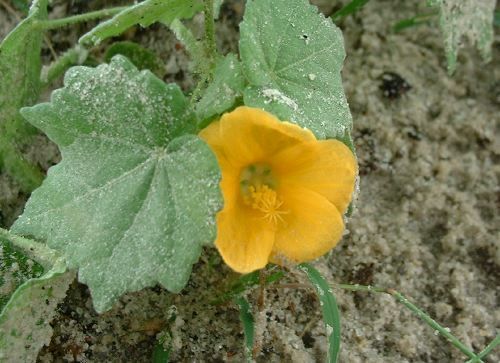
(c) Tony Benn, some rights reserved (CC BY-NC), uploaded by Tony Benn

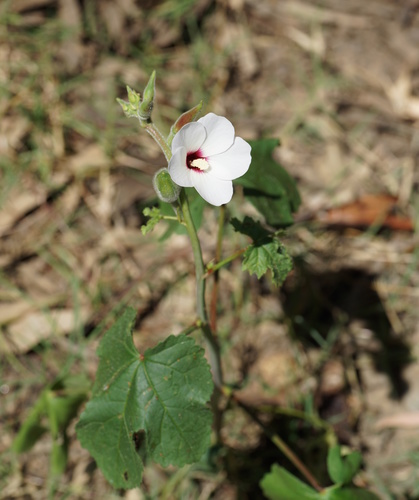
(c) joanyoung, some rights reserved (CC BY-NC)
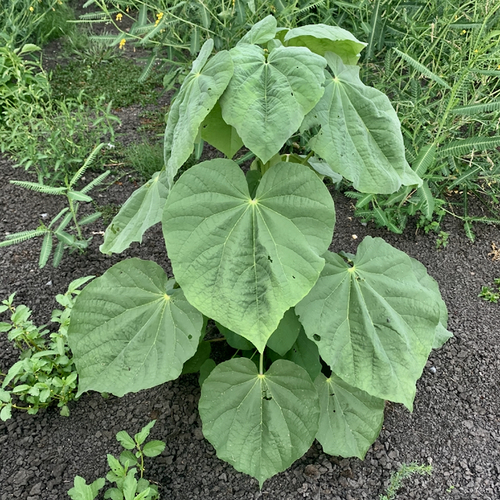
(c) Riana Fourie, some rights reserved (CC BY-NC), uploaded by Riana Fourie
What to Eat
Edible parts: Leaves, Flowers, Vegetable
The young leaves and flowers are cooked and eaten as vegetables. Flowers can be dried before cooking. Leaves can be dried and stored for later use.
Where to Find It
It is a tropical plant. In Tanzania it grows between 100-2,700 m above sea level.
Africa, Botswana, East Africa, Madagascar, Mozambique, Namibia, Rwanda, Southern Africa, Tanzania, Zimbabwe,
How to Identify
A shrub or small tree. It grows 5 m tall. There are prickles along the stem. The leaves are twice divided and there are 8-18 pairs of pinnae. There are up to 50 pairs of pinnules on each pinnae. The flowers are yellow. They are in large clusters at the ends of branches. The pods are flattened.
How to Grow
It can be grown by seed.
Medicinal Uses
The leaf contains mucilage and is used to treat problems of the digestive tract. The cooked or raw leaves are eaten as a remedy for hiccups. The roots are boiled and the liquid drunk twice a day in the treatment of coughs and pneumonia. The liquid can also be used to ease labour pains. An infusion of the root forms part of preparations taken in the treatment of epilepsy and heartache. The powdered root is applied externally on to burns. The flowers are made into a lotion applied in case of skin problems.
Other Uses
A fibre obtained from the stem bark is used for making cloth, string and cordage. It is sometimes used for stitching mats together, or for weaving into cloth. The fibre is pale and lustrous, but short, not strong and more brittle than jute, although the tests may have been carried out on a poorly processed sample. To obtain the fibre, the branches are cut, stripped of leaves and left to soak in water overnight, after which the bark is stripped off and the inner bark separated from the outer bark. After the non-fibrous parts of the inner bark have been scraped off, the fibres are rolled between the palms or on the thigh and allowed to coil to form a rope. The large and soft leaves are sometimes used as toilet paper. The stems are used as tinder. The flowers are a good source of bee forage.
Other Information
It is not widely eaten.
Notes
It can be a problem weed.
Names & Synonyms
Afopotsy, Fiefie, Fyefye, Fyofyokoe, Nyalufungulo, Umushoshwe
References (5)
- Grubben, G. J. H. and Denton, O. A. (eds), 2004, Plant Resources of Tropical Africa 2. Vegetables. PROTA, Wageningen, Netherlands. p 559
- Ruffo, C. K., Birnie, A. & Tengnas, B., 2002, Edible Wild Plants of Tanzania. RELMA p 80
- Ruiters-Welcome, A. K., 2019, Food plants of southern Africa. Ph.D. thesis. Univ. of Johannesburg p 74
- Welcome, A. K. & Van Wyk, B.-E., 2019, An inventory and analysis of the food plants of southern Africa. South African Journal of Botany 122 (2019) 136–179
- World Checklist of Useful Plant Species 2020. Royal Botanic Gardens, Kew