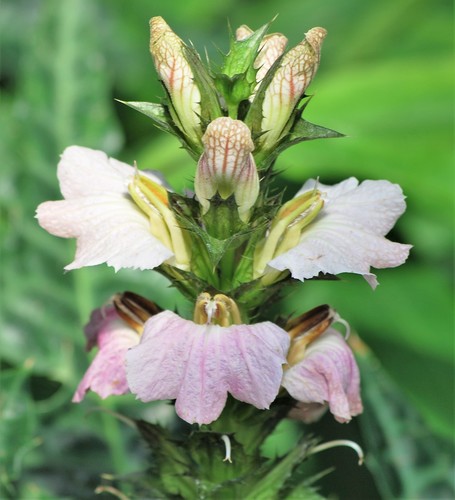
Acanthopale laxiflora
(Lindau) C. B. Clarke

Wikimedia Commons - Acanthopale_laxiflora.jpg
What to Eat
Edible parts: Vegetable, Leaves
Leaves - cooked and used as a vegetable. Young leaves are chopped, washed and cooked, coconut milk or groundnut paste is added, and then it is eaten with ugali or rice.
Where to Find It
It is a tropical plant. It is an undershrub that grows in wet mountain rainforests. It suits humid locations. It grows up to 2,100 m above sea level.
Africa, East Africa, Tanzania, Uganda,
How to Identify
A shrub or small tree. It grows 5 m tall. There are prickles along the stem. The leaves are twice divided and there are 8-18 pairs of pinnae. There are up to 50 pairs of pinnules on each pinnae. The flowers are yellow. They are in large clusters at the ends of branches. The pods are flattened.
How to Grow
Plants can be grown from seeds.
Wikipedia
Source ↗Acanthopale laxiflora is a weak shrub growing up to two meters tall with woody stems. It is usually grown as an ornamental plant. It grows primarily in the wet tropical biome.
Production
Leaves are collected during the rainy season.
Notes
It is considered a weed.
Names & Synonyms
Hongoani, Nyakibiki, Nyakigoma
References (4)
- Grubben, G. J. H. and Denton, O. A. (eds), 2004, Plant Resources of Tropical Africa 2. Vegetables. PROTA, Wageningen, Netherlands. p 559
- Msuya, T. S., et al, 2010, Availability, Preference and Consumption of Indigenous Foods in the Eastern Arc Mountains, Tanzania, Ecology of Food and Nutrition, 49:3, 208-227
- Ruffo, C. K., Birnie, A. & Tengnas, B., 2002, Edible Wild Plants of Tanzania. RELMA p 96
- World Checklist of Useful Plant Species 2020. Royal Botanic Gardens, Kew