Eriogonum cernuum
Nutt.
Nodding buckwheat
(c) Patty Mitchum, some rights reserved (CC BY), uploaded by Patty Mitchum

(c) Steve Matson, some rights reserved (CC BY), uploaded by Steve Matson

(c) faerthen, some rights reserved (CC BY-NC), uploaded by faerthen
What to Eat
Edible parts: Seeds
The seeds are crushed and eaten.
Where to Find It
It is a temperate plant.
North America, USA,
How to Identify
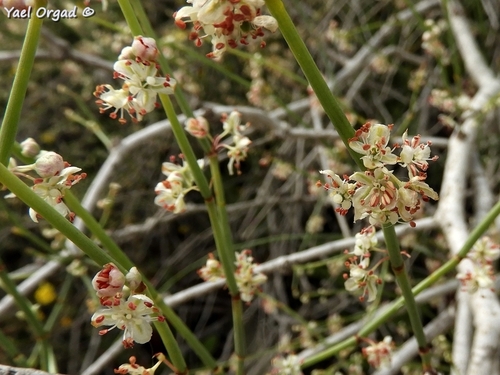
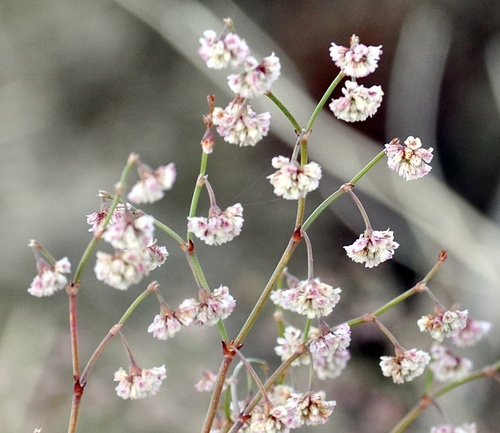
A spreading herb. It grows each year from seed. It grows 50-60 cm tall. There is a flowering stem 3-20 cm tall. The leaves are at the base or sheathing the stem. The seeds are 1.5-2 mm long.
Wikipedia
Source ↗Eriogonum cernuum is a species of wild buckwheat known by the common name nodding buckwheat. It is native to much of western North America, where it grows in sandy and gravelly habitat, including woodland and sagebrush. It is an annual herb growing up to about 60 centimeters in maximum height with a thin, branching flowering stem. The rounded, woolly leaves are one or two centimeters wide and are mainly located about the base of the stem. The inflorescence is evenly lined with hanging involucres of flowers. The individual flowers are less than 2 millimeters wide and white to pink-tinged in color.
Names & Synonyms
References (1)
- Moerman, D. F., 2010, Native American Ethnobotany. Timber Press. p 221