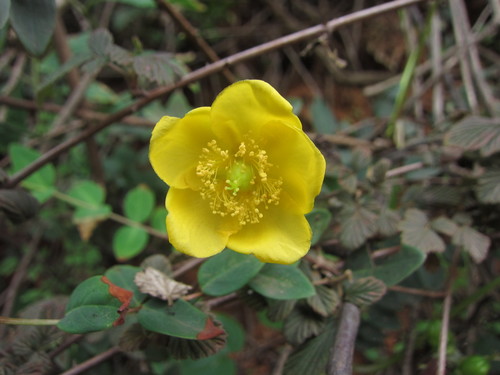
Hypericum scouleri subsp. scouleri
Hook.
Scouler's St. John's wort
HypericaceaeLeaves

iNaturalist · cc-by
(c) Steve Matson, some rights reserved (CC BY), uploaded by Steve Matson
(c) Steve Matson, some rights reserved (CC BY), uploaded by Steve Matson

iNaturalist · cc-by
(c) Jeffrey Lee (he/him/his), some rights reserved (CC BY), uploaded by Jeffrey Lee (he/him/his)
(c) Jeffrey Lee (he/him/his), some rights reserved (CC BY), uploaded by Jeffrey Lee (he/him/his)

iNaturalist · cc-by-nc
(c) faerthen, some rights reserved (CC BY-NC), uploaded by faerthen
(c) faerthen, some rights reserved (CC BY-NC), uploaded by faerthen
What to Eat
Edible parts: Leaves
The leaves are dried and ground into a flour used as a substitute for acorn meal.
Where to Find It
It is a temperate plant.
North America, USA,
Countries: Antigua & Barbuda, Barbados, Bahamas, Belize, Canada, Costa Rica, Cuba, Dominica, Dominican Republic, Grenada, Guatemala, Honduras, Haiti, Jamaica, St Kitts & Nevis, St Lucia, Mexico, Nicaragua, Panama, Puerto Rico, El Salvador, Trinidad & Tobago, United States, St Vincent
How to Identify
An herbaceous plant in the Hypericaceae (also Clusiaceae) family found in temperate regions. The leaves are traditionally dried and ground into flour for use like acorn meal.
Wikipedia
Source ↗Hypericum scouleri, known by the common name Scouler's St. John's wort in English, is a flowering species of plant from western North America. It grows in areas around streams and wetlands from Canada to the highlands of Mexico. It is sometimes mistaken for the invasive Perforate St John's wort from Eurasia.
Notes
Also put in the family Clusiaceae.
Names & Synonyms
Hypericum formosum var. scouleri
References (1)
- Moerman, D. F., 2010, Native American Ethnobotany. Timber Press. p 272