Polygonum posumbu
Buch.-Ham.
Kengoi
(c) Sara Rall, some rights reserved (CC BY-NC)

(c) katharina2525, some rights reserved (CC BY-NC)

(c) katharina2525, some rights reserved (CC BY-NC)
What to Eat
Edible parts: Shoots, Leaves
The leaves are used as a spice, in chutney, and as a vegetable, and are sold in local markets. The shoots and leaves are both edible.
Where to Find It
It is a tropical plant. It grows between 100-3,000 m above sea level. In Sichuan and Yunnan.
Asia, China, Himalayas, India, Indochina, Indonesia, Japan, Korea, Myanmar, Nepal, Northeastern India, Philippines, SE Asia, Taiwan, Thailand, Tibet, Vietnam,
How to Identify
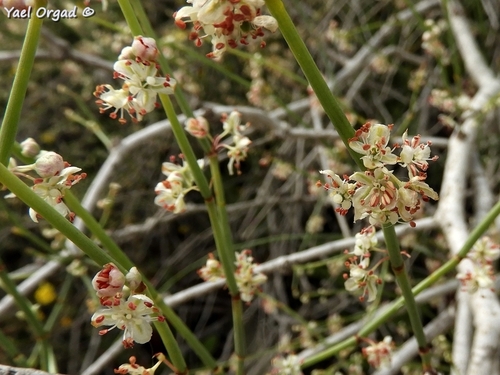
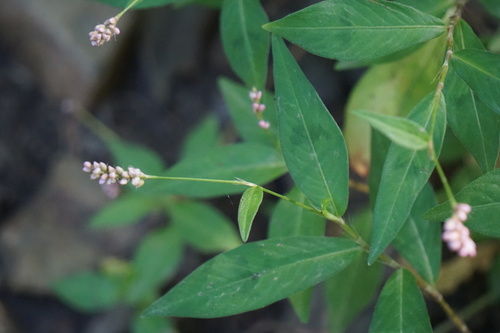
A herb. It grows each year from seed. The stems lie along the ground and are 30-70 cm long. The plant is branched at the base. The leaves are oval and 3-6 cm long by 1-2 cm wide. The flowering shoots can be in the axils of leaves or at the ends of branches. The fruit is 3 sided.
Other Information
Leaves are sold in local markets.
Names & Synonyms
Namne ao, Nghe nho, Phak-pai, Singjo bua, Singju
References (7)
- Flora of China @ efloras.org Volume 5
- Jain et al, 2011, Dietary Use and Conservation Concern of Edible Wetland Plants at Indo-Burma Hotspot: A Case Study from Northeast India. Journal of Ethnobiology and Ethnomedicine 7:29 p 7 (As Persicaria posumba)
- Medhi, P. & Borthakur, S. K., 2012, Phytoresources from North Cachur Hills of Assam -3: Edible plants sold at Hflong market. Indian Journal of Natural Products and Resources. 3(1) pp 84-109
- Medhi, P. & Borthakur, S. K., 2013, Wild edible plants sold by the Zeme Nagas at the makeshift market of Mahur, Dima Hasao district of Assam. Pleione 7(1): 84 - 93. 2013 (As Persicaria posumbu)
- Medhi, P., Sarma, A and Borthakur, S. K., 2014, Wild edible plants from the Dima Hasao district of Assam, India. Pleione 8(1): 133-148
- Meitei, L. R., et al, 2022, An ethnobotanical study on the wild edible plants used by forest dwellers in Yangoupokpi Lokchao Wildlife Sanctuary, Manipur, India. Ethnobotany Research and Application 23:15 (As Persicaria posumbu)
- Murtem, G. & Chaudhrey, P., 2016, An ethnobotanical note on wild edible plants of Upper Eastern Himalaya, India. Brazilian Journal of Biological Sciences, 2016, v. 3, no. 5, p. 63-81