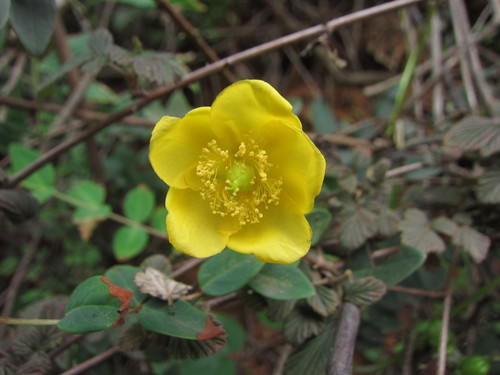
Vismia orientalis
Engl.
HypericaceaeFruit

gbif · cc-by
Royal Botanic Gardens, Kew
Royal Botanic Gardens, Kew

gbif · cc-by
Meise Botanic Garden
Meise Botanic Garden

gbif · cc-by
Royal Botanic Gardens, Kew
Royal Botanic Gardens, Kew
What to Eat
Edible parts: Fruit
The fruit is edible.
Where to Find It
It is a tropical plant. It grows in the lowlands. It grows from sea level to 1,000 m above sea level.
Africa, East Africa, Mozambique, Tanzania,
Countries: Angola, Burkina Faso, Burundi, Benin, Botswana, Congo (DRC), Central African Republic, Congo (Republic), Cote d'Ivoire, Cameroon, Cape Verde, Djibouti, Algeria, Egypt, Eritrea, Ethiopia, Gabon, Ghana, Gambia, Guinea, Equatorial Guinea, Guinea-Bissau, Kenya, Comoros, Liberia, Lesotho, Libya, Morocco, Madagascar, Mali, Mauritania, Mauritius, Malawi, Mozambique, Namibia, Niger, Nigeria, Rwanda, Seychelles, Sudan, Sierra Leone, Senegal, Somalia, South Sudan, Sao Tome & Principe, Eswatini, Chad, Togo, Tunisia, Tanzania, Uganda, South Africa, Zambia, Zimbabwe
How to Identify
A shrub or small tree. It grows 3-8 m tall. It loses its leaves during the year. The leaves are 10-12 cm long by 4-7 cm wide. The flowering shoots are at the ends of the branches. The flowers are white with pink marks. The fruit is a green berry with red dots. The fruit are 8 mm across. The seeds are 3 mm long.
Medicinal Uses
Used in traditional medicine.
Notes
It is an unresolved species in The Plant List. It is used in traditional medicine.
Names & Synonyms
Mkuntukuntu, Msakame
References (1)
- http://www.fao.org/forestry/25323-096344a3de335832e8f363c3ac5184a66.pdf