Hibiscus squamosus
Hochr.

(c) ONG OeBenin, some rights reserved (CC BY-NC), uploaded by ONG OeBenin

Wikimedia Commons - Sandipoutsider
What to Eat
Edible parts: Leaves
The leaves are edible.
Where to Find It
It is a tropical plant. It grows in damp and marshy places. It grows in wet grass savannah.
Africa, Burkina Faso, Ghana, Guinea, Guinée, Guinea-Bissau, Nigeria, Togo, West Africa,
How to Identify
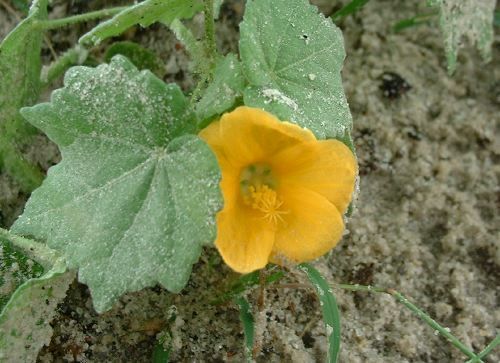
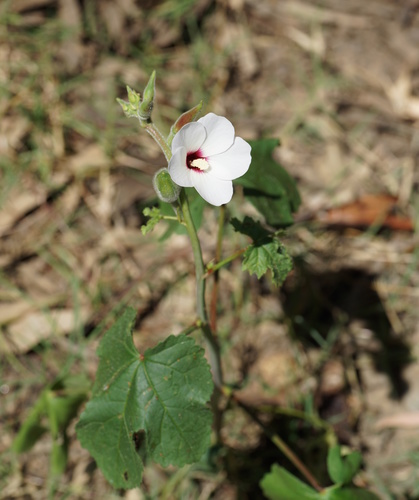
A herb. It has a woody rootstock. It puts up annual stems that are 1 m high. The stems can be hairy. The flowers are small and pale yellow with a dark purple centre.
How to Grow
Propagation: Seed - sow in situ or in containers. Germination is usually fairly rapid and no special pretreatment is needed, although germination will be faster if the seed is abraded or soaked prior to sowing. Prick out container-grown seedlings into individual pots when they are large enough to handle and plant them out into their permanent positions when they are 10cm or more tall. Division of the rootstock, preferably when the plant is dormant
Other Uses
A good quality fibre is obtained from the bark. The fibre is of similar quality to that obtained from jute (Corchorus species).
References (1)
- Batawila, K., et al, 2007, Diversite et gestion des legumes de cueillete au Togo. African Journal of Food, Agriculture, Nutrition and Development 7( 3& 4): 66