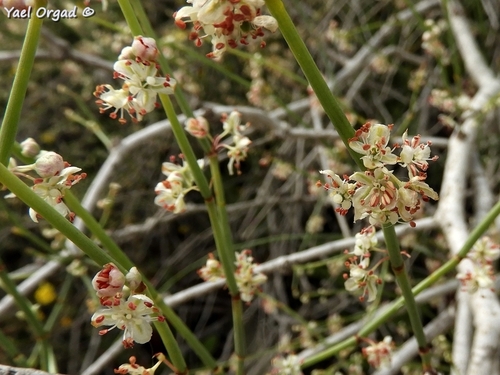
Polygonum auriculatum
Meissn.

gbif · cc-by-nc
Yiching Lin
Yiching Lin

gbif · cc-by-nc
Yiching Lin
Yiching Lin

gbif · cc-by-nc
Yiching Lin
Yiching Lin
What to Eat
Edible parts: Fruit, Leaves
The young leaves are cooked and eaten.
Where to Find It
It is a subtropical plant.
Asia, Himalayas, India, Northeastern India,
Countries: United Arab Emirates, Afghanistan, Armenia, Azerbaijan, Bangladesh, Bahrain, Brunei, Bhutan, China, Georgia, Indonesia, Israel, India, Iraq, Iran, Jordan, Japan, Kyrgyzstan, Cambodia, North Korea, South Korea, Kuwait, Kazakhstan, Laos, Lebanon, Sri Lanka, Myanmar, Mongolia, Maldives, Malaysia, Nepal, Oman, Philippines, Pakistan, Qatar, Saudi Arabia, Singapore, Syria, Thailand, Tajikistan, Timor-Leste, Turkmenistan, Turkey, Taiwan, Uzbekistan, Vietnam, Yemen
How to Identify
A herb or shrub. It has a woody base and puts up soft shoots. It can be scrambling. The leaves are 8-15 cm long. They are oval. There can be hairs on the veins underneath. The flowers are white or pink. The fruit are small 3 sided nutlets.
Notes
Polygonum auriculatum Makino and Polygonum auriculatum Meisner are different plants. Polygonum auriculatum Makino is now Polygonum praetermissum Hook.f.;
Names & Synonyms
Indrani, Torckumbuk
Polygonum chinense var. ovalifolium Meissn.
References (3)
- Murtem, G. & Chaudhrey, P., 2016, An ethnobotanical note on wild edible plants of Upper Eastern Himalaya, India. Brazilian Journal of Biological Sciences, 2016, v. 3, no. 5, p. 63-81
- Patiri, B. & Borah, A., 2007, Wild Edible Plants of Assam. Geethaki Publishers. p 114 (As Polygonum auriculatum)
- Sarma, H., et al, 2010, Updated Estimates of Wild Edible and Threatened Plants of Assam: A Meta-analysis. International Journal of Botany 6(4): 414-423 (As Polygonum auriculatum)