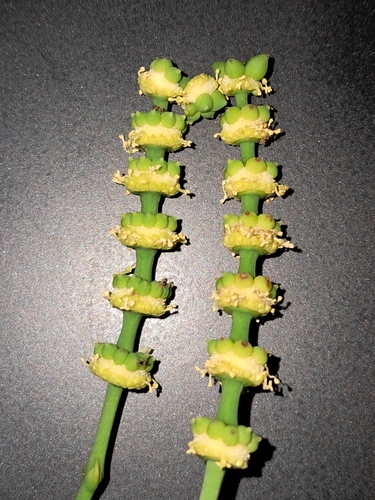
Gnetum leyboldii
Tulasne
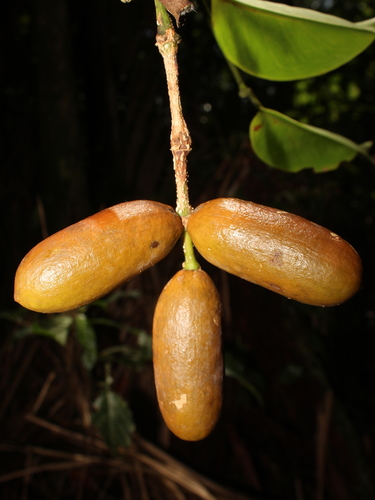
iNaturalist · cc-by-nc
(c) Leonardo Álvarez-Alcázar, some rights reserved (CC BY-NC), uploaded by Leonardo Álvarez-Alcázar
(c) Leonardo Álvarez-Alcázar, some rights reserved (CC BY-NC), uploaded by Leonardo Álvarez-Alcázar
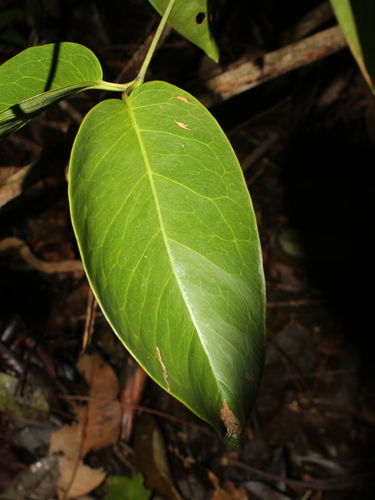
iNaturalist · cc-by-nc
(c) Leonardo Álvarez-Alcázar, some rights reserved (CC BY-NC), uploaded by Leonardo Álvarez-Alcázar
(c) Leonardo Álvarez-Alcázar, some rights reserved (CC BY-NC), uploaded by Leonardo Álvarez-Alcázar
What to Eat
Edible parts: Fruit, Seeds, Nuts
The seeds are roasted and eaten whole, or ground into flour that is dried in the sun and fried as crackers.
Where to Find It
It is a tropical plant. It grows in floodplains and upland forests in the Amazon. It grows up to 1,300 m above sea level.
Amazon, Bolivia, Brazil*, Central America, Colombia, Costa Rica*, Ecuador, Guyana, Panama, Peru, South America, Venezuela,
How to Identify
A creeper or climbing plant. It can be 30 m long. The fruit are orange to red. They are oblong and shiny. They are 5 cm long by 2-3 cm wide. The seeds are edible.
Production
The fruit are collected from the ground.
Names & Synonyms
Bala huayo, Hambre huayo, Itua, Pajil ruro, Paujillo, Paujil ruro, Purgante de picon
Gnemon leyboldii (Tul.) KuntzeGnetum dioicum Leyb. ex Tul.Gnetum paraense HuberThoa leyboldii (Tul.) Doweld
References (5)
- Kermath, B. M., et al, 2014, Food Plants in the Americas: A survey of the domesticated, cultivated and wild plants used for Human food in North, Central and South America and the Caribbean. On line draft. p 392
- Kew Plants of the World On line
- Roa, J. A. G. & Boada, D. S. G., 2018, Fundación para el Fortalecimiento de la Fruticultura y Plantas Alimenticias no Convencionales en Colombia.
- Smith, N., et al, 2007, Amazon River Fruits. Flavors for Conservation. Missouri Botanical Gardens Press. p 134
- Vasquez, R. and Gentry, A. H., 1989, Use and Misuse of Forest-harvested Fruits in the Iquitos Area. Conservation Biology 3(4): 350f