Herrania nitida
(Poepp.) R. E. Schult.
Glossy herrania
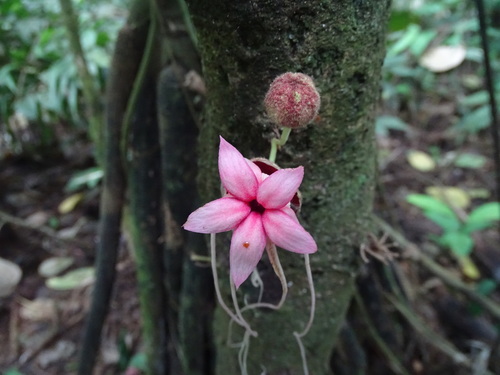
(c) Juan E. Yèpez C, some rights reserved (CC BY-NC), uploaded by Juan E. Yèpez C
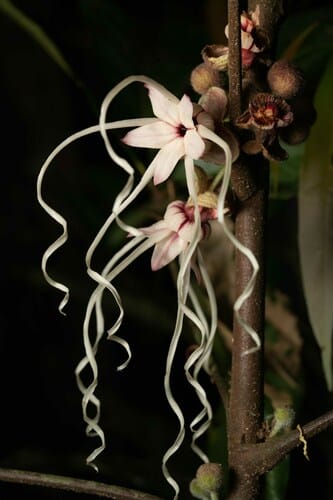
(c) Riley Fortier, some rights reserved (CC BY-NC)
What to Eat
Edible parts: Fruit
Fruit. The white, acidulous pulp surrounding the seed is eaten raw. The pulp is most delicious just before the complete ripening of the fruit. The seed contains up to 66% oil. It is solid at room temperature, turning liquid at 25 - 29°c. The oil comprises 18 - 26% linoleic acid, 2 - 7% oleic acid and 74 - 76% saturated acids. Although we have no specific information for this species, the pulp surrounding the fruits of most, if not all members of the genus are edible. This white, acidulous pulp is eaten raw and is most delicious just before the complete ripening of the fruit.
Known Hazards
Where to Find It
It is a tropical plant. It grows on the highest parts of the floodplain in the Amazon. It grows in deep shade.
Amazon, Bolivia*, Brazil*, Colombia*, Ecuador*, Peru*, South America,
How to Identify
A tree. It grows 4 m tall. It has flowers and fruit on the trunk. The fruit are elongated pods with ridges. They are 11 cm long by 5 cm wide. They hang down. They are green when ripe and have a pointed tip. There are about 24 seeds in a sweet white pulp.
How to Grow
The flowers are pollinated by phorid flies.
Other Uses
The heartwood is pinkish brown, the sapwood pale pink. The wood has no distinctive odour or taste; it is straight- or wavy-grained; coarse-textured. It is light in weight; soft; not durable. It requires sharp tools in order to cut smoothly across the grain. This species germinates and grows well in sunny positions when young. Thus it is often found acting almost like a weed in agricultural clearings and can be used as a pioneer species.
Notes
Also in the family Byttneriaceae and Sterculiaceae.
Names & Synonyms
Bogikawe, Boginka, Bowinka, Cacahuillo, Cacao silvestre, Coquio'cho, Sacha cacao, Senori, Siku sampu
References (9)
- Friedman, J., et al, 1993, A Novel Method for Identification and Domestication of Indigenous Useful Plants in Amazonian Ecuador. In Janick, J. (Ed), New crops. Wiley.
- Grandtner, M. M. & Chevrette, J., 2013, Dictionary of Trees, Volume 2: South America: Nomenclature, Taxonomy and Ecology. Academic Press p 298
- Kermath, B. M., et al, 2014, Food Plants in the Americas: A survey of the domesticated, cultivated and wild plants used for Human food in North, Central and South America and the Caribbean. On line draft. p 413
- Lopez-Diago, D. & Garcia, N., 2021, Wild edible fruits of Colombia. Biota ColomBiana 22 (2) p 41
- NYBG Herbarium "edible" (var. stenophylla)
- Roa, J. A. G. & Boada, D. S. G., 2018, Fundación para el Fortalecimiento de la Fruticultura y Plantas Alimenticias no Convencionales en Colombia.
- Smith, N., et al, 2007, Amazon River Fruits. Flavors for Conservation. Missouri Botanical Gardens Press. p 150
- Torre, de la, L., et al, 2008, Enciclopedia de las Plantas Útiles del Ecuador. Herbario QCA. Pontificia Universidad Católica del Ecuador. p 598
- Vasquez, R. and Gentry, A. H., 1989, Use and Misuse of Forest-harvested Fruits in the Iquitos Area. Conservation Biology 3(4): 350f