Musa mannii
H. Wendl. ex Baker
Indian dwarf banana

Wikimedia Commons - Ulf Eliasson

Wikimedia Commons - Tournasol7
What to Eat
Edible parts: Fruit
The ripe fruit are eaten fresh.
Where to Find It
It is a subtropical plant. It cannot tolerate frost. It needs a well drained rich soil. In Melbourne Botanical Gardens hothouse. It suits hardiness zones 10-11.
Asia, Australia, India, Northeastern India,
How to Identify
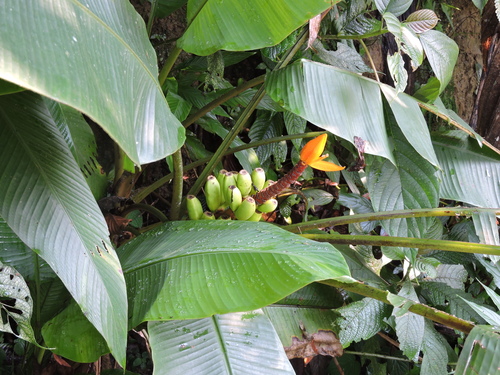
A small banana. It grows 1.5 m tall. The false stem is slender. It has purple black spots. The leaves are oblong and 60-80 cm long by 18-20 cm wide. The leaves are green but the midrib is red. The leaf stem is 20-25 cm long. The flowering shoot is erect at first and then droops. The flowering stem is 15-18 cm long and 2 cm across. It is red with white down. The bracts are red. Fruit are 5-6 cm long. They are light green to yellow when ripe. The ripe fruit can be eaten. The seeds are 5-6 mm long. There are 20-30 seeds in each fruit. It produces many suckers.
How to Grow
Plants are grown from seeds. It is best to soak the seeds for 3 days.
Wikipedia
Source ↗Musa mannii is a species of wild banana (genus Musa).