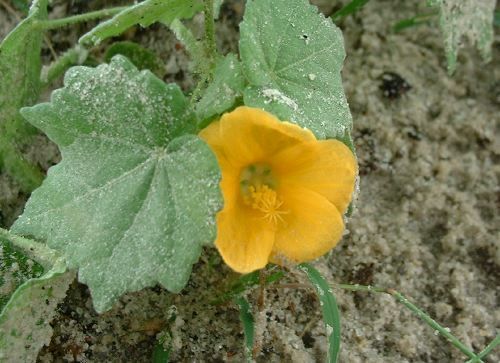
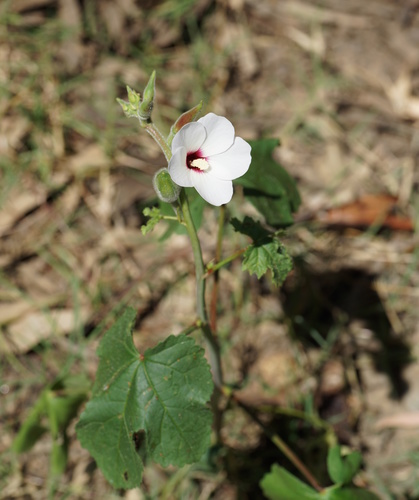
Cola scheffleri
K. Schum.

(c) andreaudzungwa, some rights reserved (CC BY-NC)
What to Eat
Edible parts: Fruit
The sweet pulp of the fruit is eaten raw. The seeds, which contain caffeine, are chewed as a stimulant.
Where to Find It
It is a tropical plant. It grows in lowland forests. It is often along rivers and in humus rich soils.
Africa, East Africa, Tanzania,
How to Identify
An evergreen tree. It grows 8-20 m tall. The trunk can be 60 cm across. The crown is pyramid shape. The bark has small cracks. The leaves are simple and alternate. The leaf stalk is 4-10 cm long. The leaves are 8-23 cm long by 4-13 cm wide. They are oblong and heart shaped at the base. They taper to the tip. The flowers are as separate sexes in dense clusters on old wood. The soft pink sepals form softly hairy cups. These are 2 cm across. The fruit are as 2 orange brown leathery capsules. These are 6 cm long. There are a few large seeds.
How to Grow
Plants can be grown from seeds.
Other Uses
This species is a locally common pioneer of medium sized semi-deciduous forest gaps.
Wikipedia
Source ↗Cola scheffleri is a species of flowering plant in the family Malvaceae. It is found only in Tanzania.
Notes
Also put in the family Sterculiaceae.
Names & Synonyms
Kavi, Mlungu, Mombwe, Msamaka, Msasami
References (3)
- Lovett, J. C. et al, Field Guide to the Moist Forest Trees of Tanzania. p 170
- Ruffo, C. K., Birnie, A. & Tengnas, B., 2002, Edible Wild Plants of Tanzania. RELMA p 214
- World Checklist of Useful Plant Species 2020. Royal Botanic Gardens, Kew