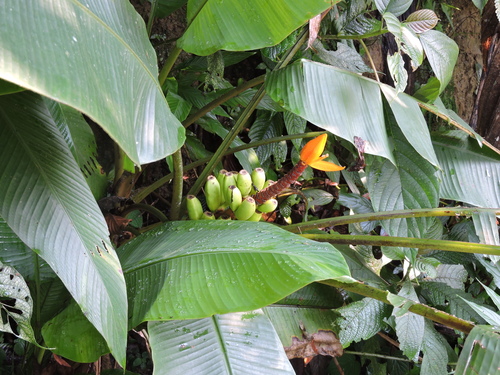
Musa coccinea
Andr.
Chuoi rung, Scarlet banana

(c) Leon Perrie, some rights reserved (CC BY-NC), uploaded by Leon Perrie
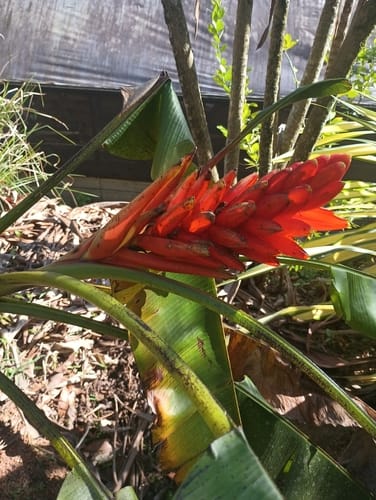
(c) perezmichael, some rights reserved (CC BY-NC)

(c) Cy Stavros, some rights reserved (CC BY)
What to Eat
Edible parts: Fruit
The fruit is edible.
Where to Find It
It is a tropical plant. It grows in ravines and on slopes from near sea level to 600 m above sea level. In XTBG Yunnan.
Asia, China, Colombia, Indochina, SE Asia, South America, Vietnam,
How to Identify
A small banana plant. The false stems are 1-2 m tall. The leaf stalk is 30-50 cm long. It has narrow wings. The leaves are lighter green underneath. They are oblong and 1.8-2.2 m long by 70-80 cm wide. The base is rounded and unequal. The flowering shoots are erect. The bracts are bright red inside. There are 6 flowers in one row in each bract. The flowers are yellow. The fruit hang down and are 10-12 cm long by 4 cm wide. There are many seeds.
Wikipedia
Source ↗Musa coccinea, commonly known as scarlet banana or red-flowering banana, is a species of flowering plant in the banana and plantain family Musaceae, native to tropical China (in Guangdong, Guangxi, and southeastern Yunnan) and Vietnam. It is a bat-pollinated evergreen perennial, placed in section Callimusa (now including the former section Australimusa), having a diploid chromosome number of 2n = 20. The flower cluster is more rounded than in the related species M. beccarii. It is made up of erect spirals of red bracts which enclose tubular yellow flowers. The inedible fruits are orange, only about 2 cm (0.8 in) long, and contain seeds. The species is cultivated for its ornamental value, being grown, for example, along with heliconias in commercial farms in Hawaii. It does not tolerate temperatures below 10 °C (50 °F), so in temperate zones requires protection during the winter months. In the UK it has gained the Royal Horticultural Society's Award of Garden Merit. M. coccinea is a known host in the New World of the red palm mite (Raoiella indica).
Other Information
It is cultivated.
Names & Synonyms
Platano
References (2)
- McElwee, P. D., 2010, Resource Use Among Rural Agricultural Households Near Protected Area in Vietnam: The Social Costs of Conservation and Implications for Enforcement. Environmental Management 45:113-131
- Wiersema, J. H. & Leon, B., 2013, World Economic Plants. A Standard Reference CRC Press. 2nd Ed. p 457