Quercus geminata
Small
Sand live oak
FagaceaeSeeds/Nuts
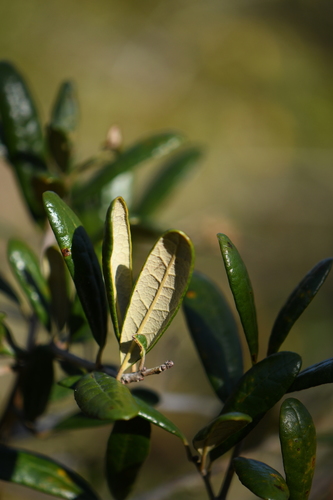
iNaturalist · cc-by-nc
(c) Curren Frasch, some rights reserved (CC BY-NC), uploaded by Curren Frasch
(c) Curren Frasch, some rights reserved (CC BY-NC), uploaded by Curren Frasch

iNaturalist · cc-by-nc
(c) Timothy Frey, some rights reserved (CC BY-NC)
(c) Timothy Frey, some rights reserved (CC BY-NC)

iNaturalist · cc-by-nc
(c) Timothy Frey, some rights reserved (CC BY-NC)
(c) Timothy Frey, some rights reserved (CC BY-NC)
What to Eat
Edible parts: Nuts, Acorns
The nuts are leached to remove bitter tannins and then eaten.
Where to Find It
It is a temperate plant. It grows in coastal areas.
North America, USA,
Countries: Antigua & Barbuda, Barbados, Bahamas, Belize, Canada, Costa Rica, Cuba, Dominica, Dominican Republic, Grenada, Guatemala, Honduras, Haiti, Jamaica, St Kitts & Nevis, St Lucia, Mexico, Nicaragua, Panama, Puerto Rico, El Salvador, Trinidad & Tobago, United States, St Vincent
How to Identify
A temperate oak tree native to coastal areas.
Wikipedia
Source ↗Quercus geminata, commonly called sand live oak, is an evergreen oak tree native to the coastal regions of the subtropical southeastern United States, along the Atlantic Coast from southern Florida northward to southeastern Virginia and along the Gulf Coast westward to southern Mississippi, on seacoast dunes and on white sands in evergreen oak scrubs.
Names & Synonyms
Quercus virginiana f. grandifolia Sarg.Quercus virginiana var. geminata (Small) Sarg.
References (2)
- INFOODSUpdatedFGU-list.xls
- Kermath, B. M., et al, 2014, Food Plants in the Americas: A survey of the domesticated, cultivated and wild plants used for Human food in North, Central and South America and the Caribbean. On line draft. p 735
More from Fagaceae

Castanea alnifolia
Bush chinkapin, Florida chinkapin, Trailing chinkapin, Downy chinquapin

Castanea crenata
Japanese chestnut

Castanea dentata
American chestnut, American sweet chestnut

Castanea henryi
Zhui li, Conic chestnut
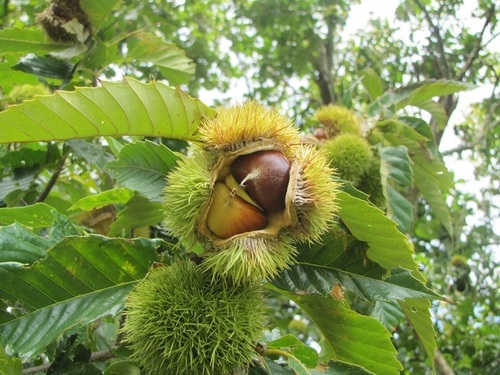
Castanea mollissima
Chinese chestnut

Castanea ozarkensis
Ozark chinkapin, Ozark chestnut