Raphia australis
Oberm. & Strey
Kosi palm, Southern raphia palm

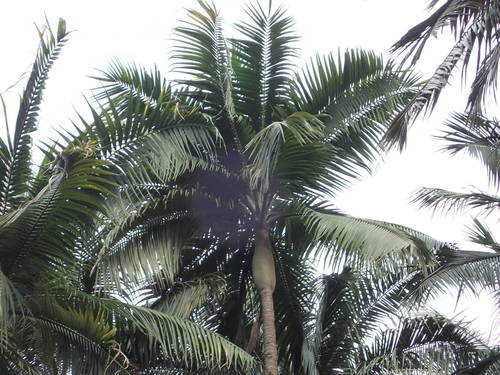
(c) Ton Rulkens, some rights reserved (CC BY-SA)
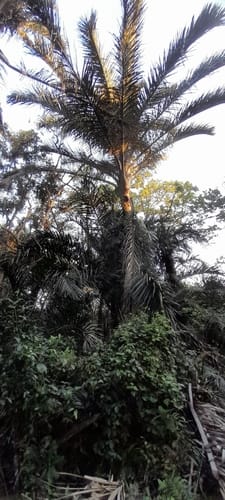
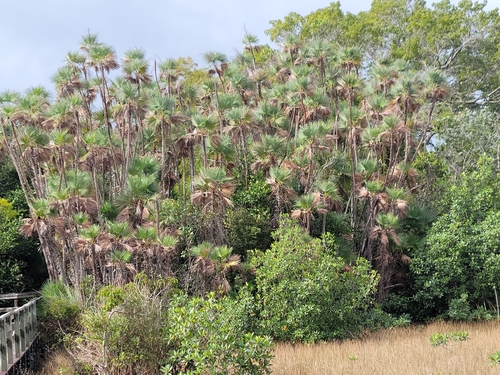
(c) Ricky Taylor, some rights reserved (CC BY-NC)
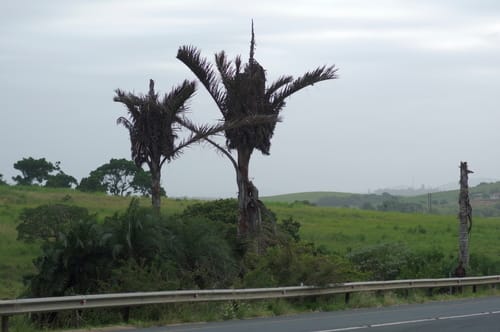
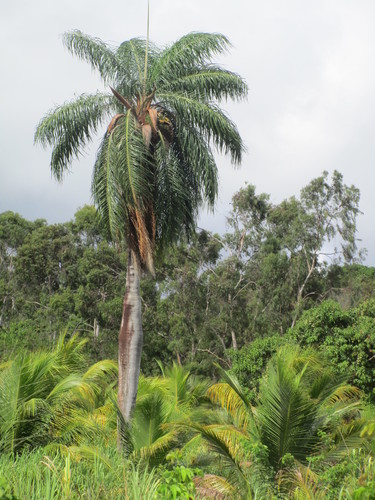
(c) Craig Peter, some rights reserved (CC BY-NC)
What to Eat
Edible parts: Pith - starch
The pith contains edible starch.
Where to Find It
It is a tropical plant. It grows in freshwater swamp forests.
Africa, Asia, East Africa, Indonesia, Mozambique*, SE Asia, South Africa,
How to Identify
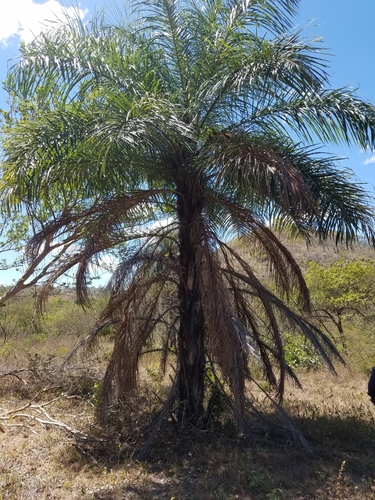
A solitary palm. The stem is broad and 12 m tall. It has a dense crown. The leaves are stiffly erect and there are leaflets along the stalk. The leaf stalks do not have spines. The leaflets are narrow and they have spines along the edge. The flowering shoots is covered by a sheath 3 m long. The flowers are brownish. The fruit are oval and scaly. There is one seed.
How to Grow
Plants can be grown from seeds.
Propagation: Seed - fresh seed grows easily once the outer scales have been removed. Seedlings need filtered sunlight, plentiful water and protection from wind.
Other Uses
The vast petioles and midribs are used to make outriggers for canoes. They have been for various purposes, including to make rafts, market stalls, bus shelters etc. The seeds are used as good, if bulky, ornaments.
Wikipedia
Source ↗Raphia australis, the giant palm, Kosi Palm, or rafia, is a species of raffia palm in the family Arecaceae. It is found around Kosi Bay in southern Mozambique and northeastern KwaZulu Natal in South Africa. It is threatened by habitat loss caused by drainage of its habitat for agriculture; it is being threatened in the Bobole Special Reserve but is more secure in the Kosi Bay area.
Names & Synonyms
Palem kosi
References (2)
- INFOODSUpdatedFGU-list.xls
- Sukarya, D. G., (Ed.) 2013, 3,500 Plant Species of the Botanic Gardens of Indonesia. LIPI p 811